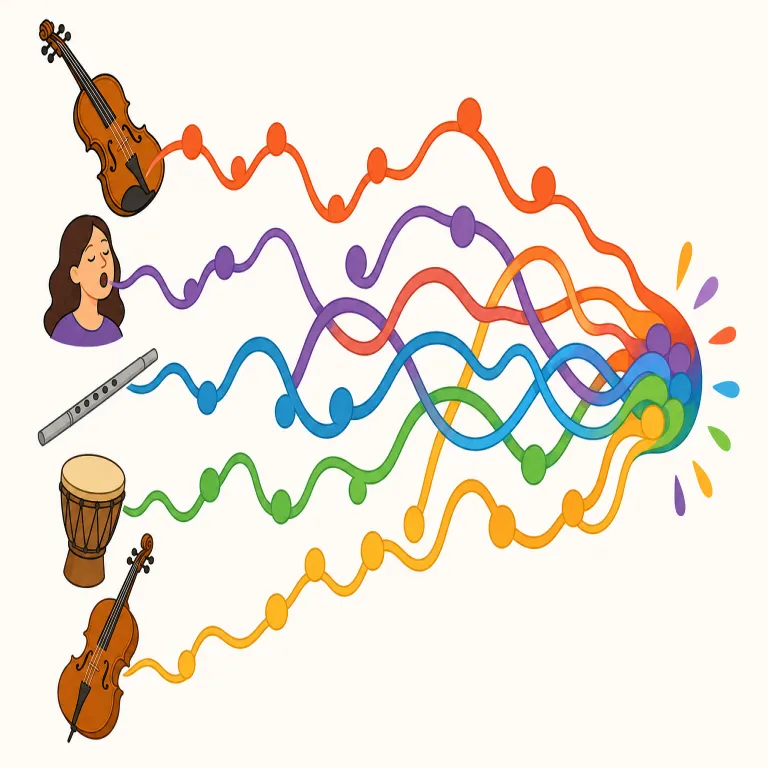
多声性、複数の声の共存
noun 名詞文学・言語研究で、一つの作品や発話の中に、互いに独立した複数の声や視点が共存する性質をいう。単なる意見の多さではなく、単一の語り手の立場に統合されない多声性を論じる際に使われる。
複数の独立した旋律を同時に奏でる音楽技法。バッハのフーガなどに代表される多声音楽。
Polyphony is a style of music in which two or more separate melodies are played or sung at the same time. It is often used when talking about classical, choral, or traditional music, and it focuses on how independent musical lines sound together.
telephone の phone、symphony の phony と同じ「音・声」の感覚を使い、poly- を「複数」と見れば、polyphony は「多くの声が同時にある音楽」とつかめる。ポイントは、ただ大勢で同じ旋律を歌うのでなく、各声部がそれぞれ独立して動くこと。バッハのフーガや合唱のソプラノ・アルト・テノール・バスが別々に進む場面を思い浮かべると定着しやすい。symphony は「交響曲」で作品名寄り、polyphony は書法・響き方の語。
Notice `poly-`, which means many, and `-phony`, which is linked to sound or voice, like in `telephone`. That gives you the picture of many voices sounding at the same time. It helps to compare it with `symphony`: `symphony` is a kind of musical work, but `polyphony` is about how several parts move together.
Bach's fugues are considered masterpieces of polyphony in Western classical music.
バッハのフーガは西洋クラシック音楽における多声音楽の傑作とされている。
The choir performed a breathtaking piece of Renaissance polyphony.
合唱団はルネサンス期の多声音楽の息をのむような楽曲を演奏した。
Studying polyphony helps musicians understand how multiple melodies can coexist harmoniously.
多声音楽を学ぶことは、複数の旋律がどのように調和して共存するかを音楽家が理解するのに役立つ。
文脈によって、次の意味でも使われます。
文学・言語研究で、一つの作品や発話の中に、互いに独立した複数の声や視点が共存する性質をいう。単なる意見の多さではなく、単一の語り手の立場に統合されない多声性を論じる際に使われる。
polyphony はギリシャ語 poly-「多くの」+ phonē「声・音」に由来し、ラテン語・フランス語を経て英語へ入った。語源どおり「多くの声が同時に響く」ことから多声音楽を表し、同語根に telephone, symphony がある。
Polyphony comes from Greek roots: poly- meaning "many" and phone meaning "voice" or "sound." It passed through Latin and French before entering English. The original idea was "many sounds together," which developed into the sense of several independent voices sounding at the same time. Related English words with the same root include telephone and symphony.
この英単語をクイズで覚えよう