甌穴、岩のくぼみ
noun 名詞川床などの岩盤にできる、深く丸い天然の穴を指す地形上の用法です。水流で小石が回転しながら岩を削ることで形成され、人工的な道路の損傷とは区別されます。
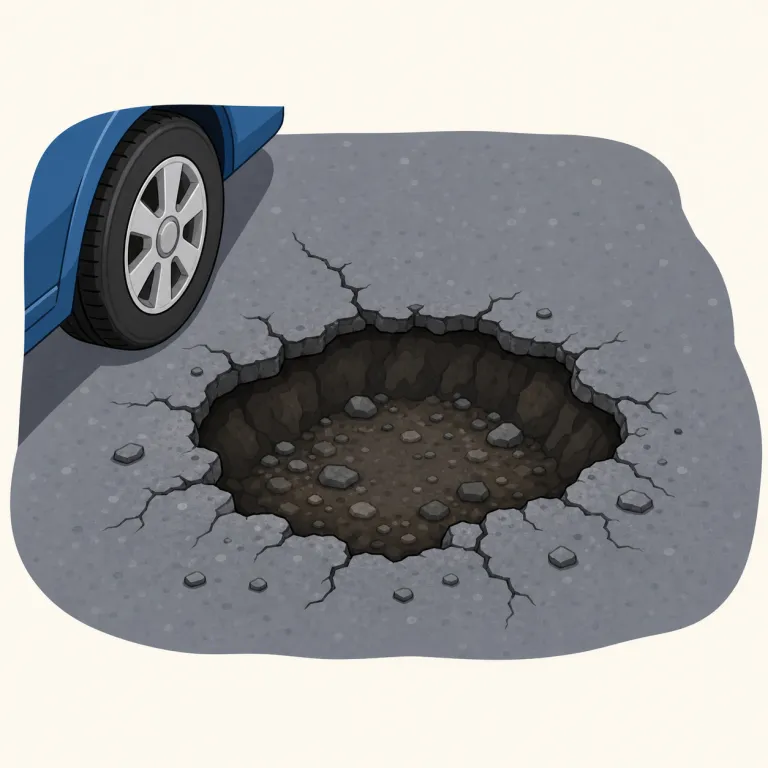
路面の穴とは、道路やアスファルトの表面に形成された凹みや穴のことです。主に雨水の浸透と凍結融解サイクルによって発生します。交通安全上の問題となり、車両への損傷や事故の原因となります。
A pothole is a hole or damaged area in the surface of a road. It is usually caused by wear, weather, or traffic, and it can be dangerous for cars, bicycles, and motorcycles.
pot + hole と分けると覚えやすい。pot は深さのある容器なので、pothole は道路にできた「器のように丸くえぐれた穴」というイメージ。単なる hole より、舗装道路にできて車や自転車がガタンとはまりそうな危ない穴を指す。hit a pothole, avoid potholes, a pothole in the road などで頻出。manhole は点検用のふた付き穴、sinkhole は地面が崩れ落ちる大穴で、pothole とは場面が違う。
Split it into `pot` + `hole`. A pot is deep and rounded, so a `pothole` is not just any hole, but a road hole with that rough bowl-like shape. Learn it with common phrases like `hit a pothole` or `avoid potholes`.
The car hit a pothole and got a flat tire.
車が路面の穴にはまり、タイヤがパンクした。
The city council allocated funds to repair potholes on Main Street.
市議会はメインストリートの路面の穴を修復するための資金を割り当てた。
Heavy rain and freezing temperatures created numerous potholes.
大雨と氷点下の気温により、路面に多くの穴ができた。
文脈によって、次の意味でも使われます。
川床などの岩盤にできる、深く丸い天然の穴を指す地形上の用法です。水流で小石が回転しながら岩を削ることで形成され、人工的な道路の損傷とは区別されます。
主にイギリス英語で、地中へ深く延びる天然の竪穴や洞窟を指します。洞窟探検の文脈で用いられ、道路に生じた穴を表す日常的な語義とは異なります。
pothole は英語の pot「深い器」と hole「穴」を合わせた語で、どちらも古英語・ゲルマン系にさかのぼる土着語です。道路の穴が「鍋のように丸くえぐれた穴」に見えることから生まれ、形の比喩がそのまま意味になっています。関連語に pottery、hollow があります。
Pothole is a native English compound of pot and hole, both old Germanic words. It originally described a hole shaped like a deep round pot. The meaning later settled on the idea of a round hollow in a road or ground, created from that simple shape comparison.
この英単語をクイズで覚えよう