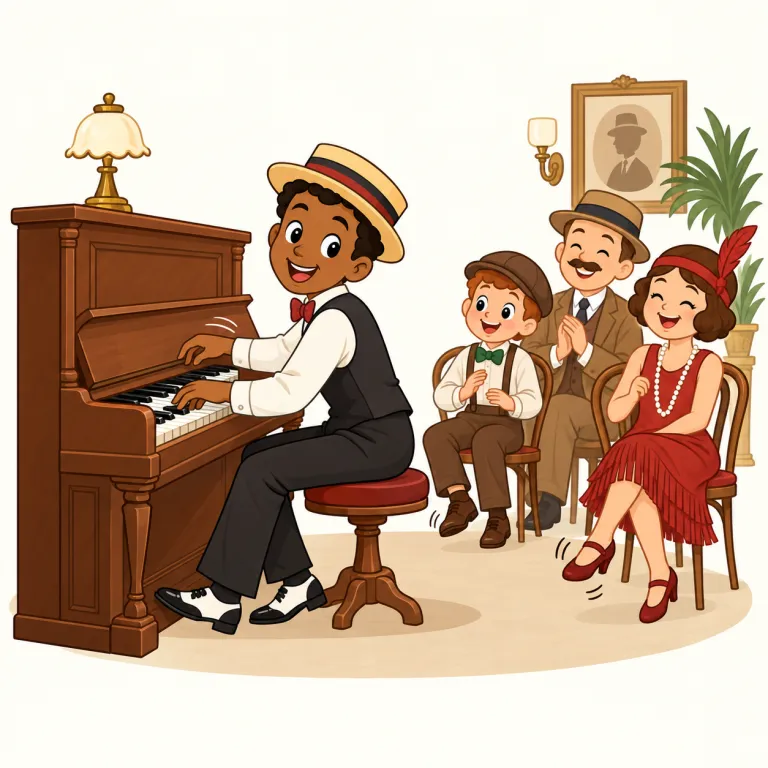
ラグタイム
解説 Definition
ragtime は、19世紀末から20世紀初めに米国で広まった音楽様式で、特に作曲されたピアノ曲で知られます。規則的な行進曲風の伴奏に、アクセントをずらした旋律が重なり、軽快で弾むようなリズムを生みます。
Ragtime is a style of American popular music that flourished around the turn of the twentieth century, especially as composed piano music. It is characterized by strongly syncopated melodies played against a regular, marchlike accompaniment, producing a lively and bouncing rhythmic effect.
使い方 Usage
使い分け Common distinctions
- ragtime はジャズ一般の言い換えではありません。ジャズに影響を与えた、作曲されたピアノ曲を中心とする独自の様式です。 Ragtime is not a general synonym for jazz. It is a distinct style, often associated with composed piano music, that influenced jazz.
覚え方のコツ Memory Tip
ragged time「崩した拍子」と結び付け、左手の規則的な伴奏に右手のずれたアクセントが重なる、弾むリズムを思い浮かべましょう。
Connect ragtime with “ragged time.” Imagine a steady left-hand accompaniment and a right-hand melody with displaced accents, creating a bright, bouncing rhythm.
例文
The pianist played a lively ragtime piece at the concert.
そのピアニストはコンサートで軽快なラグタイムの曲を演奏しました。
Ragtime became popular in the United States around the turn of the twentieth century.
ラグタイムは20世紀に入る頃、アメリカで人気を集めました。
ragtime の類義語・関連語
派生語
紛らわしい語
ragtime の語源・成り立ち Etymology
英語のrag(ぼろ布→不規則な)とtime(拍子)の合成語。19世紀末アメリカで生まれた音楽用語で、ragged time(不規則なリズム)の短縮形。シンコペーション(裏拍強調)が特徴的なピアノ音楽を指す。関連語:rag(ラグ)、raggedの語感が「ずれた拍子」という意味を生んだ。
Ragtime is an American English musical term documented in the late nineteenth century. It combines rag, or the related idea of ragged rhythm, with time in the musical sense of meter or beat. The name refers to rhythm that seems broken up or displaced through syncopation. It became attached to a distinctive American style, especially piano compositions pairing syncopated melodies with a steady accompaniment, and is often understood as a shortening of ragged time.
同じレベルの語彙をもっと
外部辞書で調べる
この英単語をクイズで覚えよう