叱責する
解説 Definition
不適切な行為や規則違反に対して、厳しく叱る・公式に非難することを表します。罰そのものを与えるというより、権威ある立場から強くとがめることが中心です。
"Reprimanding" means officially or seriously scolding someone for doing something wrong. It is often used in workplaces, schools, or other formal situations. The word is stronger and more formal than simply saying "telling off."
覚え方のコツ Memory Tip
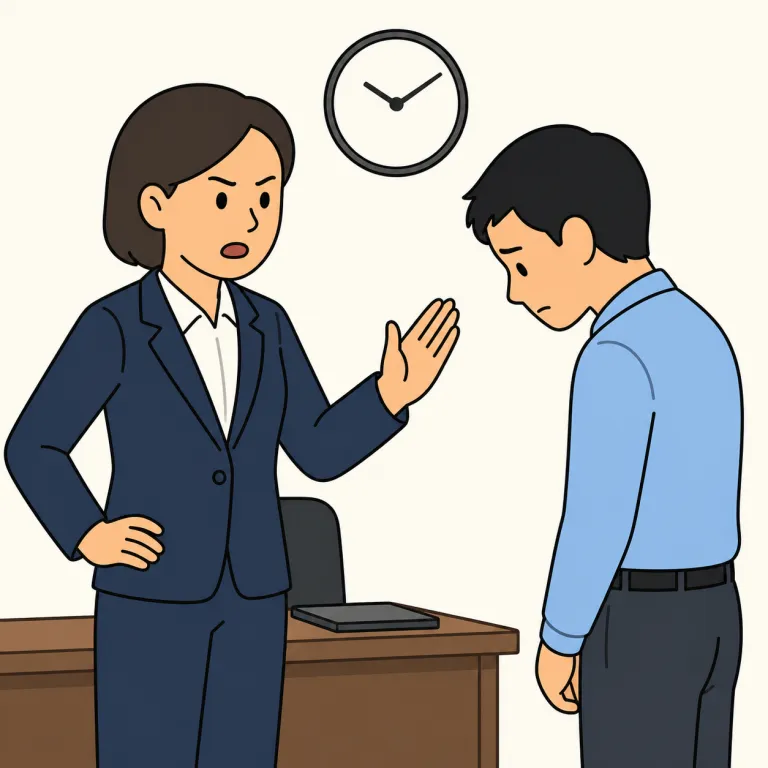
reprimanding は reprimand「厳しく叱責する」の進行形・動名詞形で、権威ある人が規則違反を言葉で正式にとがめている場面を描くと定着しやすい語です。The manager was reprimanding an employee for being late のように、reprimand 人 for 行為「行為について人を叱責する」が基本形。scold が家庭内の叱り方にも使える一般語なのに対し、reprimand は校長・上司・監督などの立場からの硬く公式な非難に向きます。罰を科す punish とは区別し、まず言葉で行動を正そうとする場面だと押さえます。
`Reprimand` is much stronger than a simple `remind` or mild correction. Picture a teacher, manager, or officer speaking firmly after a rule is broken. `Reprimanding` is the `-ing` form, often heard in phrases like `reprimanding an employee`.
例文
The principal was reprimanding the student for cheating on the exam.
校長は試験でカンニングをした生徒を叱責していた。
The manager was reprimanding the employee for arriving late repeatedly.
マネージャーは何度も遅刻する従業員を叱責していた。
The coach was reprimanding the team for their lack of effort in practice.
コーチは練習で努力を怠った選手たちを叱責していた。
reprimanding の類義語・関連語
reprimanding の語源・成り立ち Etymology
reprimandはフランス語 reprimande を経て、ラテン語 reprimere「押し返す・抑える」にさかのぼり、re-「後ろへ」+ premere「押す」が核です。repressやcompressと同根で、言葉で相手の振る舞いを押さえ込むイメージから「叱責する」になりました。
Reprimanding comes from reprimand, borrowed through French from Latin reprimere, meaning "to press back" or "hold in." This Latin verb combines re- and premere, "to press," the same root seen in repress and compress. The sense shifted from physically holding back to strongly checking someone's behavior with words.
同じレベルの語彙をもっと
外部辞書で調べる
この英単語をクイズで覚えよう