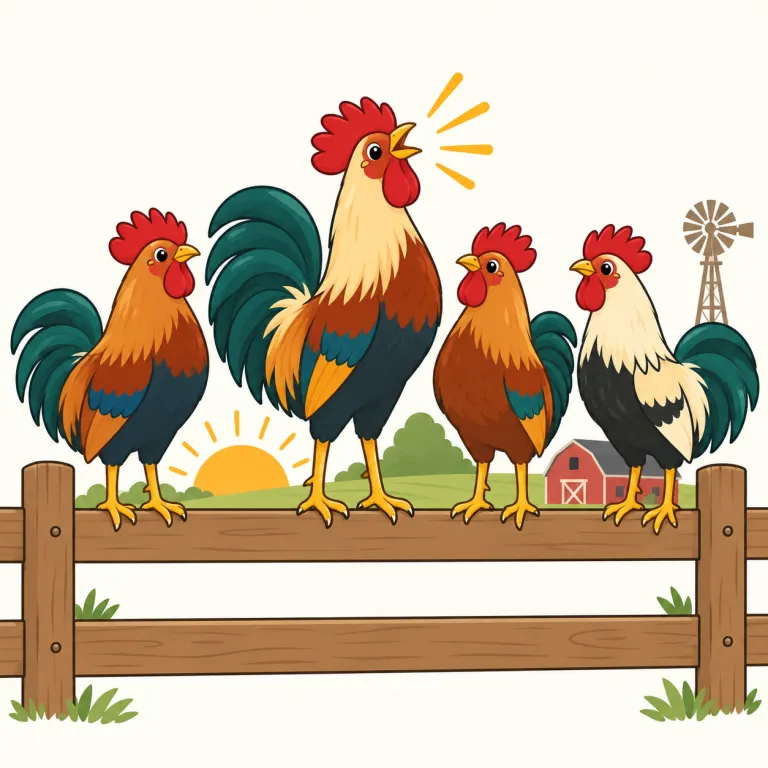
雄鶏
解説 Definition
roosters は rooster「雄鶏」の複数形で、二羽以上の成体の雄のニワトリを指します。
Roosters is the plural form of rooster and refers to two or more adult male chickens. The word is often used when describing farm birds, especially their characteristic crowing, behavior, or separation from other chickens.
覚え方のコツ Memory Tip
rooster に -s を付けた形で、語尾は /z/ と発音します。roost「止まり木・ねぐら」と結び付け、複数の雄鶏が並ぶ姿を思い浮かべましょう。
Add -s to rooster; the plural ending is pronounced /z/. Link it with roost, a place where birds perch or rest, and picture several male chickens lined up there.
例文
The roosters crowed early in the morning.
雄鶏たちは朝早く鳴きました。
Two roosters stood near the barn.
二羽の雄鶏が納屋の近くに立っていました。
roosters の類義語・関連語
roosters の語源・成り立ち Etymology
roosters は rooster の複数形で、語源は古英語 hrost に由来する roost「止まり木・ねぐら」+ -er。『止まり木につく鳥』の感覚から雄鶏を表すようになり、米語で一般化した。関連語は roost, roosting。
Roosters is formed from rooster plus the regular plural ending -s. Rooster developed from roost, meaning a perch or resting place for birds, with the agent-forming suffix -er. Roost is historically related to Old English hrōst. The bird name became especially common in American English as a term for an adult male chicken, while cock has remained another established term, particularly in British usage.
同じレベルの語彙をもっと
外部辞書で調べる
この英単語をクイズで覚えよう