振れ
解説 Definition
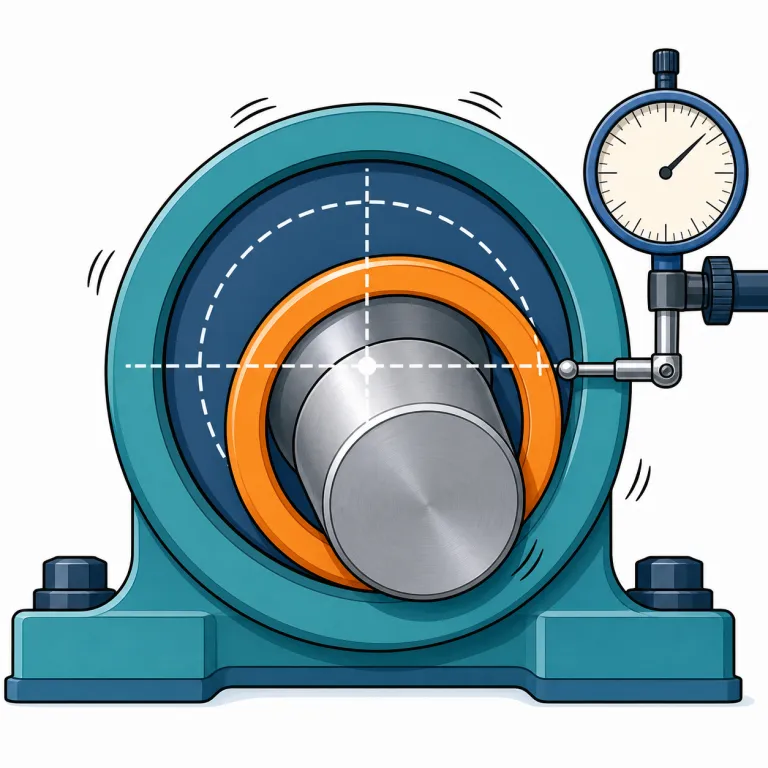
回転軸が完全に中心に保たれていない状態。機械工学で精密性に影響する振動現象。
Runout is a technical term for how much a rotating part moves away from its correct circular path. It is used in engineering and manufacturing to measure uneven turning or wobbling. Smaller runout usually means better accuracy.
覚え方のコツ Memory Tip
まず run + out をそのまま意識すると覚えやすいです。回転体が本来の中心線から少し外へ出ながら回る感じが、機械の「振れ」にそのままつながります。日常英語の run out of「使い切る」とは別物で、技術文脈では measure runout, axial runout, radial runout の形で出やすい語です。wobble は揺れて見える一般語ですが、runout はより測定可能な回転精度のずれを指す、と区別すると定着します。
Take it literally as `run + out`: when something spins, it runs slightly out from the perfect line. That picture helps you remember the engineering sense. It often appears in precise phrases like `axial runout`, `radial runout`, and `measure runout`.
例文
The runout of the spindle caused vibration.
スピンドルの振れが振動を引き起こした。
We measured the runout to ensure precision.
精度を確保するために振れを測定した。
Excessive runout can damage the machine.
過度な振れは機械を傷める可能性がある。
runout の類義語・関連語
runout の語源・成り立ち Etymology
runout は run+out の複合語で、古英語由来の run「走る」と out「外へ」が土台です。機械の runout が「振れ」を表すのは、回転が外側へはみ出す感覚からで、runner や overrun にも同じ run の「進み続ける」芯があります。
Runout is a compound of run and out, both old Germanic words found in Old English. The basic image is of something running outward or reaching beyond its normal line. From that physical idea, the word developed technical uses for movement or spread beyond the expected path. Related words include runner and overrun.
同じレベルの語彙をもっと
外部辞書で調べる
この英単語をクイズで覚えよう