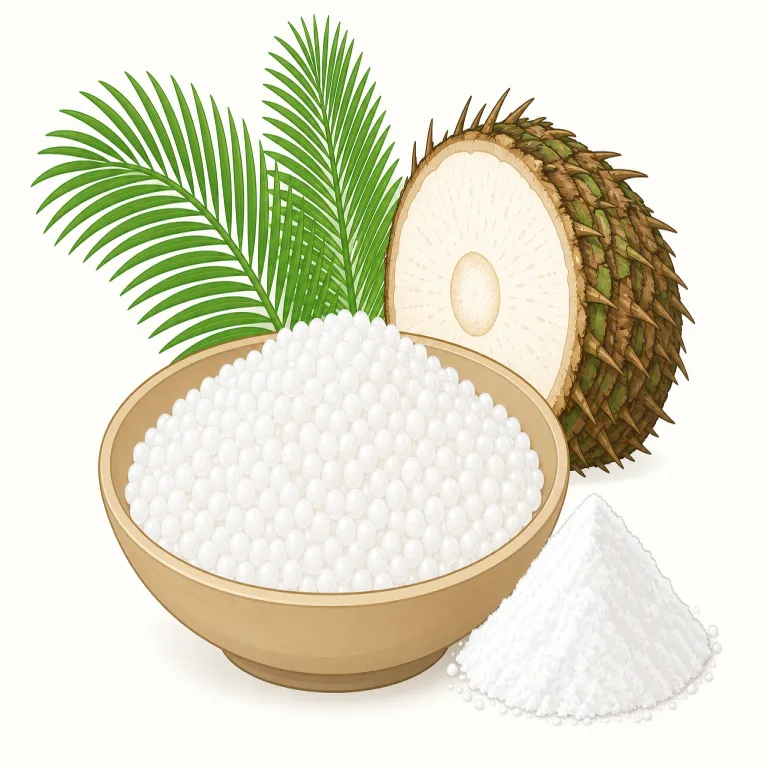
サゴ
解説 Definition
トロピカルヤシの幹から採取されるデンプン質の食材。タピオカに似た白い粉末で、アジア太平洋地域で主食として利用される。調理して甘い菓子やデザートに使われることも多い。
Sago is a starch taken from certain tropical palm trees and used as food. It is often made into small grains or pearls and used in puddings or other dishes. The word is mainly used in cooking and food-related contexts.
覚え方のコツ Memory Tip
sago は難しく分解せず、「南国で食べる、ヤシ由来のデンプン」という情景で覚えると残りやすい。tapioca と並べて、どちらも白い粒・粉になってデザートや主食に使われる食材、とまとめるのが有効。よく見る形は sago pudding や sago palm で、単独の抽象語というより食材名・植物名として現れる。穀物の flour ではなく palm から取る starch だ、と区別すると混同しにくい。
Do not try to break this word into parts. Remember it as a food word from tropical places, often seen in `sago pudding` or `sago palm`. It is useful to pair it with `tapioca`, because both are starch foods often seen as small white pearls.
例文
Sago is a starch extracted from the pith of tropical palm stems.
サゴはトロピカルヤシの幹の髄から採取されるデンプンである。
The dessert was made with sago and coconut milk.
そのデザートはサゴとココナッツミルクで作られていた。
In Southeast Asia, sago is a common staple food.
東南アジアではサゴは一般的な主食である。
sago の類義語・関連語
紛らわしい語
sago の語源・成り立ち Etymology
sago はマレー語 sagu がポルトガル語を経て英語に入った借用語。語形自体に分解要素は少なく、東南アジアでヤシから採るでんぷんの名がそのまま定着した。sago palm や sago pudding に同じ語が残る。
Sago entered English as a loanword from Malay sagu, probably through Portuguese. It originally named the starch taken from certain palms in Southeast Asia. English kept the local name with little change, rather than building a new word from native parts. It appears in forms like sago palm and sago pudding.
同じレベルの語彙をもっと
外部辞書で調べる
この英単語をクイズで覚えよう