船乗りの作業歌、舟歌
noun 名詞船員が帆を上げるなどの共同作業で動きを合わせるために歌った、一定のリズムを持つ歌を指します。sea shanty ともいい、現代では伝統的な船乗り歌という音楽ジャンルとしても用いられます。
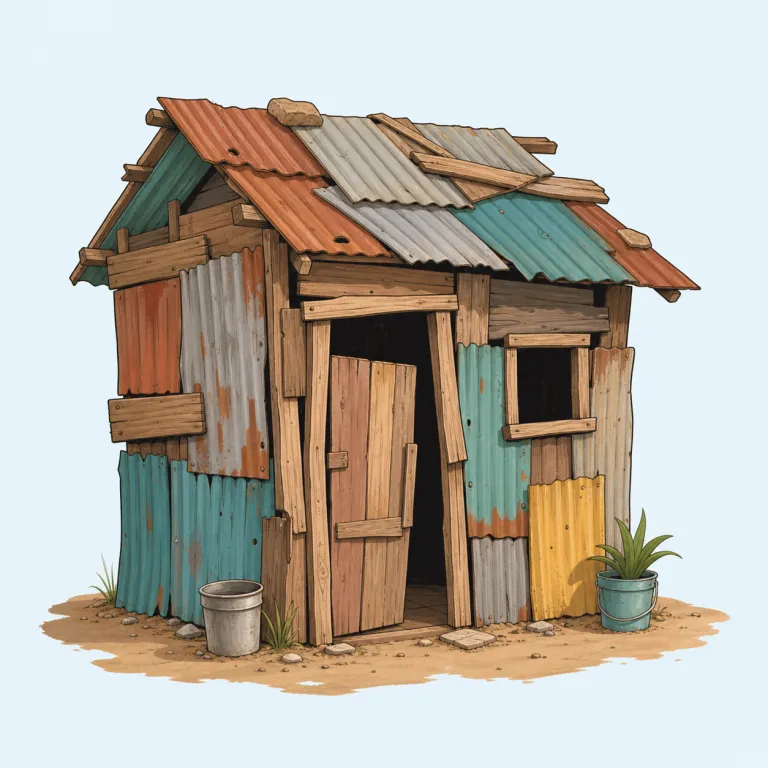
簡素な材料で粗く建てられた、小さな家や小屋です。粗末で、快適さや恒久的な住まいとしての造りに乏しい印象を伴います。
A shanty is a small, roughly built house or hut, often made from simple or poor materials. It usually suggests a place that is not comfortable or permanent.
shanty town と結びつけ、木切れやトタンを継ぎ合わせた粗末な住まいを思い浮かべます。しっかりした小屋よりも、急ごしらえの心もとない造りが記憶の核です。
Remember shanty through shanty town. Picture a rough shelter pieced together from scraps of wood or metal. Its fragile, makeshift construction is the key image.
He recalled his childhood in a shanty without running water.
彼は水道のない掘っ立て小屋で過ごした子ども時代を思い出した。
The disaster left many families living in temporary shanties.
その災害の結果、多くの家族が仮設の掘っ立て小屋で暮らすことになった。
文脈によって、次の意味でも使われます。
船員が帆を上げるなどの共同作業で動きを合わせるために歌った、一定のリズムを持つ歌を指します。sea shanty ともいい、現代では伝統的な船乗り歌という音楽ジャンルとしても用いられます。
shanty はカナダ仏語 chantier「木こりの作業小屋・作業場」から英語に入った語で、もとは森の仕事場を指した。そこから『粗末な仮小屋』へ意味が広がり、仮設の仕事小屋だから掘っ立て小屋、という流れで理解できる。
Shanty came into English from Canadian French `chantier`, meaning a worksite or lumber camp hut. At first it referred to a rough place used by workers in the forest. From there, the meaning widened to any small, simple, badly built hut.
この英単語をクイズで覚えよう