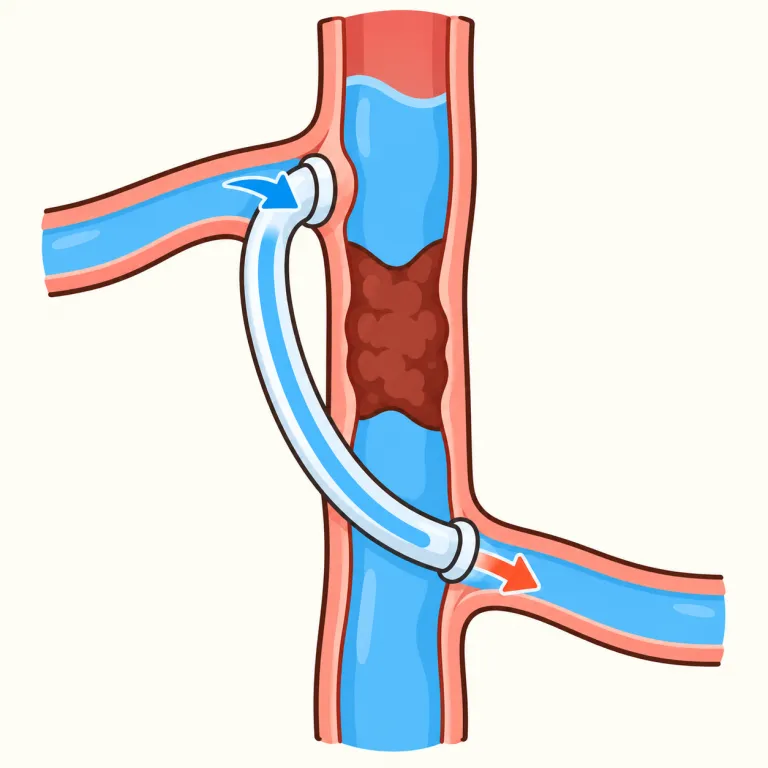
シャント
解説 Definition
shunt は、流れを別の経路へ通すための装置や通路、特に医療で使われるシャントを指す語です。日本語の「シャント」と近い意味ですが、英語では電気回路や鉄道での迂回・切り替えにも使われます。
A shunt is a passage or device that redirects blood or another body fluid along an alternative route. The term can also denote a bypass path in an electrical system or a mechanism associated with diverting railway vehicles.
覚え方のコツ Memory Tip
医療では a shunt を「血液や体液を本来とは別の経路へ流す管・通路」と覚えます。動詞 shunt の核も「脇へそらす」で、鉄道車両を側線へ移す用法や電流の迂回路にも共通します。stent が血管を開いて支える器具なのに対し、shunt は流れを別経路へ導く点が重要です。
Remember one idea across the different uses of shunt: a flow or object is sent aside onto another route. In medicine, a shunt is a tube or passage that redirects blood or another fluid. In electricity, it provides an alternative path for current, and the railway use involves moving vehicles onto another track. A useful contrast is stent: a stent supports a narrowed vessel and keeps it open, whereas a shunt creates or uses a different route for the flow. Picture a clearly marked side channel branching away from the original path.
例文
The doctor checked the shunt during the examination.
医師は診察中にシャントを確認しました。
A small shunt helped redirect the flow of fluid.
小さなシャントが液体の流れを別の方向へ導きました。
The nurse recorded the condition of the shunt in the patient's chart.
看護師は患者のカルテにシャントの状態を記録しました。
shunt の類義語・関連語
派生語
紛らわしい語
shunt の語源・成り立ち Etymology
中英語 shunten(わきへそらす)に由来し、古英語 scunian(避ける)と関連。本来は鉄道で車両を側線へ移す「転轍」の意。医学では血液や体液を迂回させる管を指し、「流れをそらす」という原義が保たれている。shun(避ける)と同根。
Shunt developed from an English verb meaning to turn or move something aside, especially a railway vehicle onto another line. It is historically associated with shun, “to avoid,” and has been linked with earlier forms expressing avoidance or diversion. The noun followed the verb: first it could denote diversion or railway switching, and it was later applied to alternative paths in electrical circuits and to surgically created routes for blood or other body fluids.
同じレベルの語彙をもっと
外部辞書で調べる
この英単語をクイズで覚えよう