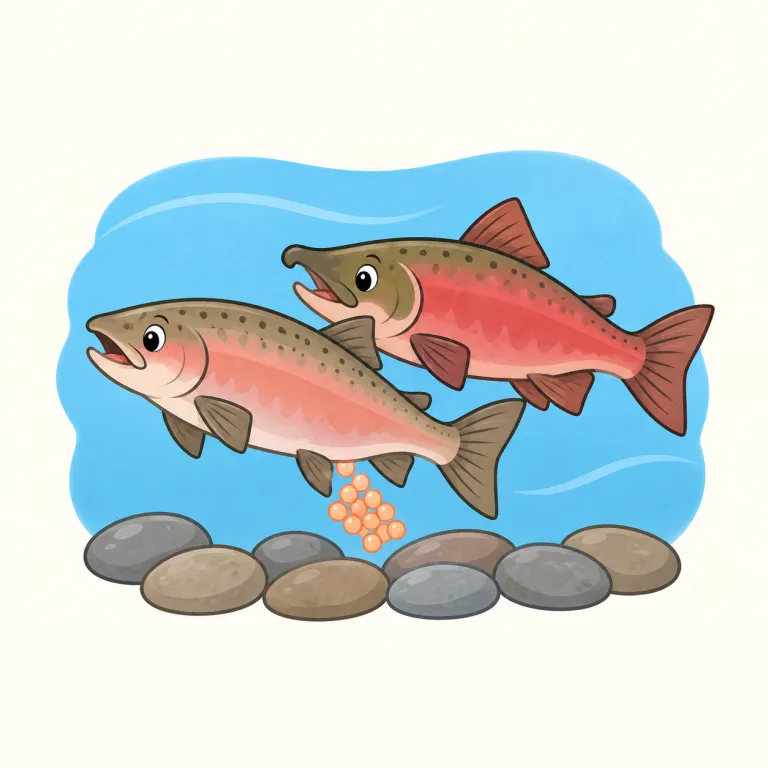
産卵
解説 Definition
spawning は spawn(産卵する、生じさせる)の現在分詞・動名詞で、名詞としては「産卵」という意味です。魚やカエルなどが卵を産む自然の過程を表すときによく使われます。
Spawning is the process in which aquatic animals such as fish or amphibians release or lay eggs, often together with the release of sperm for fertilization. It can refer to the activity itself or to a seasonal reproductive event.
覚え方のコツ Memory Tip
spawning は原形 spawn に -ing をそのまま付けた形で、綴りを変えず spawn → spawning、末尾に /ɪŋ/ を加えて発音します。名詞としては salmon spawning、fish spawning のように魚やカエルなどの「産卵」を表します。卵そのものを指す spawn と、卵を産む過程を指す spawning を区別しましょう。
Connect spawning to the base word spawn. Add -ing without changing the spelling, and pronounce the added ending /ɪŋ/. As a noun, spawning names the reproductive process, especially for fish and amphibians: salmon spawning may begin in a river, and weather can affect the timing of fish spawning. Spawn can refer to the eggs themselves or function as a verb, while spawning focuses on the activity or event. Picture fish gathering in a particular place and season to release eggs, which makes common phrases such as spawning season and spawning grounds easy to retain.
例文
Salmon spawning begins in the cold river.
サケの産卵は冷たい川で始まります。
The team studied spawning near the lake shore.
研究チームは湖岸近くでの産卵を調査しました。
Heavy rain can change the timing of fish spawning in this area.
大雨はこの地域の魚の産卵時期を変えることがあります。
spawning の類義語・関連語
spawning の語源・成り立ち Etymology
spawningはspawn「産卵する」の名詞形で、古フランス語espandre、さらにラテン語expandereにさかのぼります。ex-「外へ」+pandere「広げる」で、卵を水中に広くまく感じから「産卵」になったと考えると分かりやすいです。同根語にexpand、expanseがあります。
Spawning is formed from spawn plus the suffix -ing. Spawn entered English through Anglo-French forms related to espandre, “to spread or scatter,” ultimately from Latin expandere, “to spread out.” The word became associated with the eggs of aquatic animals and with releasing those eggs. In modern English, spawning can name the reproductive process itself, especially in fish and amphibians, as well as serve as the participle of spawn.
同じレベルの語彙をもっと
外部辞書で調べる
この英単語をクイズで覚えよう