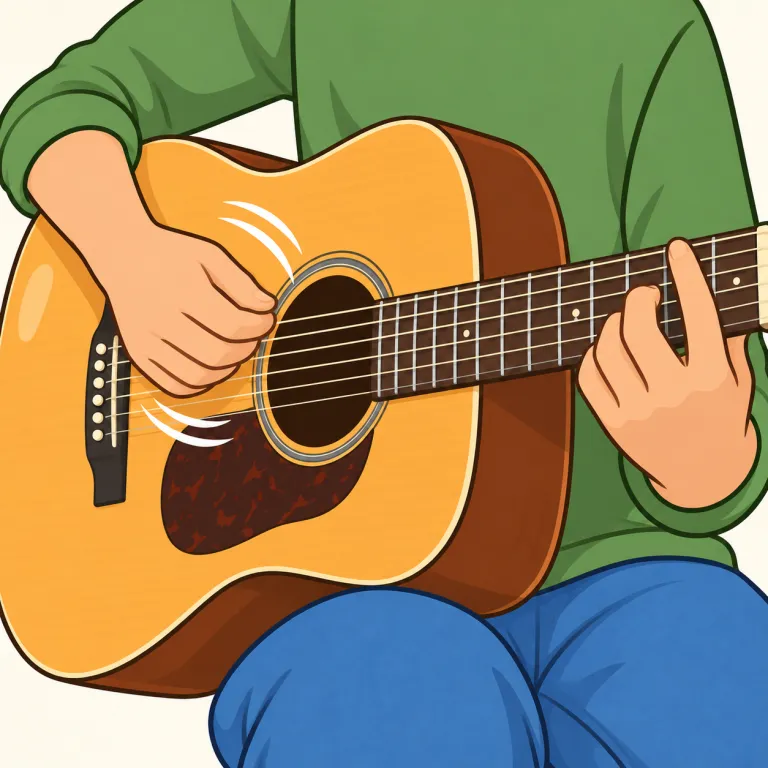
かき鳴らす
解説 Definition
strumming は strum(弦楽器をかき鳴らす)の動名詞・現在分詞です。名詞としては、ギターなどの弦を軽く繰り返しかき鳴らすことを表します。
The action or sound of repeatedly sweeping the fingers or a pick across the strings of a guitar or similar instrument, usually to produce chords and rhythm. It contrasts with playing individual strings one at a time.
覚え方のコツ Memory Tip
原形 strum は短い母音の後に子音 m が一つで終わるため、-ing の前で m を重ねて strumming と綴る。ギターなどの複数の弦を指やピックで繰り返しさっと横切る動作を思い浮かべ、gentle strumming、hear strumming、strumming pattern と結び付ける。plucking は通常、個々の弦をはじく動作。
Begin with strum, then double the final m before adding -ing: strumming. Imagine a hand or pick moving repeatedly across several guitar strings to create a chord and steady rhythm. Useful combinations include gentle strumming, hear strumming, and a strumming pattern. This helps distinguish it from plucking, which usually means sounding individual strings separately. The word can name both the physical action and the resulting sound, so a listener upstairs may hear strumming even without seeing the guitarist’s hand.
例文
Her gentle strumming filled the room with music.
彼女のやさしいかき鳴らしで、部屋は音楽に包まれました。
I could hear strumming from the small studio upstairs.
上の階の小さなスタジオから、弦をかき鳴らす音が聞こえました。
The teacher slowed his strumming so the students could follow the rhythm.
先生は生徒たちがリズムについていけるように、弦をかき鳴らす速さを落としました。
strumming の類義語・関連語
strumming の語源・成り立ち Etymology
16世紀頃の擬音語に由来し、弦を指でかき鳴らす音を模した語。thrum(単調に弾く)と関連がある。-ing で名詞化しかき鳴らす動作を表す。関連語: strum(かき鳴らす)、thrum(つま弾く)。
Strumming is the -ing form of strum, with the final m doubled under the usual spelling rule. Strum has been used since the early modern English period for playing a stringed instrument by sweeping across its strings, and its origin is generally treated as imitative or related to other words for repetitive string sounds, such as thrum. The noun in -ing denotes either the repeated playing action or the characteristic rhythmic sound it produces.
同じレベルの語彙をもっと
外部辞書で調べる
この英単語をクイズで覚えよう