行き詰まった
解説 Definition
stuck は stick(くっつく、動かなくなる)の過去形・過去分詞で、形容詞としては動けない、行き詰まったという意味です。物理的に動けない場合にも、問題が進まない場合にも使えます。
Unable to move, escape, or make further progress. The adjective can describe physical entrapment, such as being caught in traffic, or a mental and practical difficulty that prevents someone from continuing.
覚え方のコツ Memory Tip
stuck は stick「くっつく、動かなくなる」の不規則な過去形・過去分詞で、-ed は付きません。母音も stick /stɪk/ から stuck /stʌk/ に変わります。形容詞では「抜け出せず行き詰まった」。be stuck on a question は問題で詰まり、be stuck in traffic は渋滞から動けない状態です。「何かに貼り付いて進めない」を共通イメージにしましょう。
Stuck is the irregular past form and past participle of stick; it does not take -ed. Notice the vowel change from stick /stɪk/ to stuck /stʌk/. As an adjective, it describes being unable to move or progress. Keep one central image: something has “stuck” in place and cannot get free. You can be stuck in traffic, stuck with an unwanted situation, or stuck on a difficult question. The preposition helps identify the problem: in often names a surrounding situation, on often names a task, and with often names something you cannot easily change or escape.
例文
I am stuck on this question.
私はこの問題で行き詰まっています。
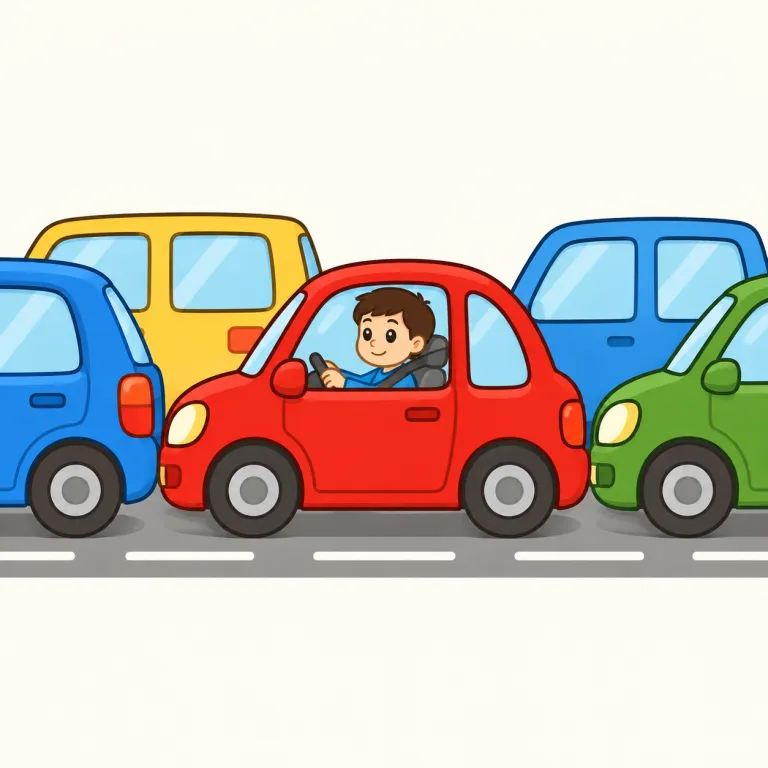
We got stuck in traffic.
私たちは渋滞にはまって動けなくなりました。
She felt stuck with the same problem.
彼女は同じ問題で行き詰まっていると感じました。
stuck の類義語・関連語
類義語
派生語
紛らわしい語
stuck の語源・成り立ち Etymology
古英語 stician(突き刺す、くっつく)に由来する stick の過去分詞形。ゲルマン祖語 *stikkan から。「刺さって動けない」→「行き詰まった」へ意味が発展した。関連語:stick(棒、くっつく)、sticker(シール)。物が刺さって抜けない状態が、比喩的に困難から抜け出せない意味になった。
Stuck is the inherited irregular past tense and past participle of stick. Stick comes from Old English stician, meaning “to pierce, stab, or remain fixed,” and belongs to a Germanic group of words associated with pointed objects and fastening. The concrete idea of something being fixed so firmly that it cannot move later produced figurative uses for a person unable to advance, solve a problem, or leave a difficult situation.
同じレベルの語彙をもっと
外部辞書で調べる
この英単語をクイズで覚えよう