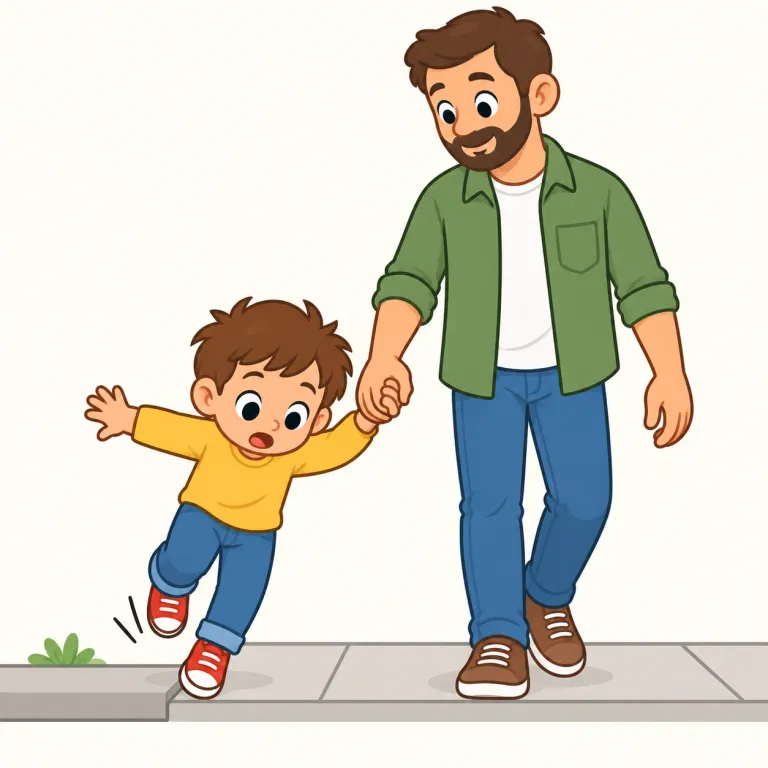
つまずく
解説 Definition
stumbling は stumble(つまずく、よろめく)の現在分詞・動名詞です。形容詞的には、足元が不安定でつまずきながら進む様子を表します。
Stumbling describes a person or movement that is unsteady because the person repeatedly loses balance or catches a foot while moving. It is also the present participle of stumble and can form continuous verb constructions.
覚え方のコツ Memory Tip
原形 stumble「つまずく」の語末 e を落として -ing を付けた現在分詞・動名詞。形容詞では a stumbling child のように「つまずきながら進む」を表す。stumbling on a rocky path なら実際の足のつまずきで、hesitating は単なるためらいなので区別する。
Link stumbling to the base verb stumble, “to trip or lose balance.” To form the -ing form, drop the final silent e and add -ing: stumble becomes stumbling. Picture a child or runner moving over a rocky path, repeatedly catching a foot and struggling to stay upright. That physical scene fits phrases such as a stumbling child and a stumbling runner. In she kept stumbling, the word functions as part of a verb construction; before a noun, it works adjectivally. Unlike hesitating, stumbling specifically suggests unstable movement or an actual loss of footing in this sense.
例文
The stumbling child held his father's hand.
つまずきそうな子どもは父親の手を握っていました。
She kept stumbling on the rocky path.
彼女は石だらけの道で何度もつまずきました。
A stumbling runner slowed down near the finish line.
つまずきながら走るランナーはゴール付近で速度を落としました。
stumbling の類義語・関連語
stumbling の語源・成り立ち Etymology
中英語 stumblen(つまずく)に由来し、古ノルド語の stumra(つまずく)と関連。語根は「障害にぶつかる」意味で、stumble に進行形 -ing が付いた形。関連語に stumble block(つまずきの石)、stump(切り株=足を引っかけるもの)がある。切り株に足を取られる情景が原義。
Stumbling is formed from stumble by dropping its final silent e and adding -ing. Stumble entered English in the Middle English period and is related to Germanic words describing tripping or moving unsteadily, including Old Norse stumra. The precise deeper history is not fully certain. In modern English, the participial form can describe an ongoing action or modify someone who is moving with repeated losses of balance.
同じレベルの語彙をもっと
外部辞書で調べる
この英単語をクイズで覚えよう