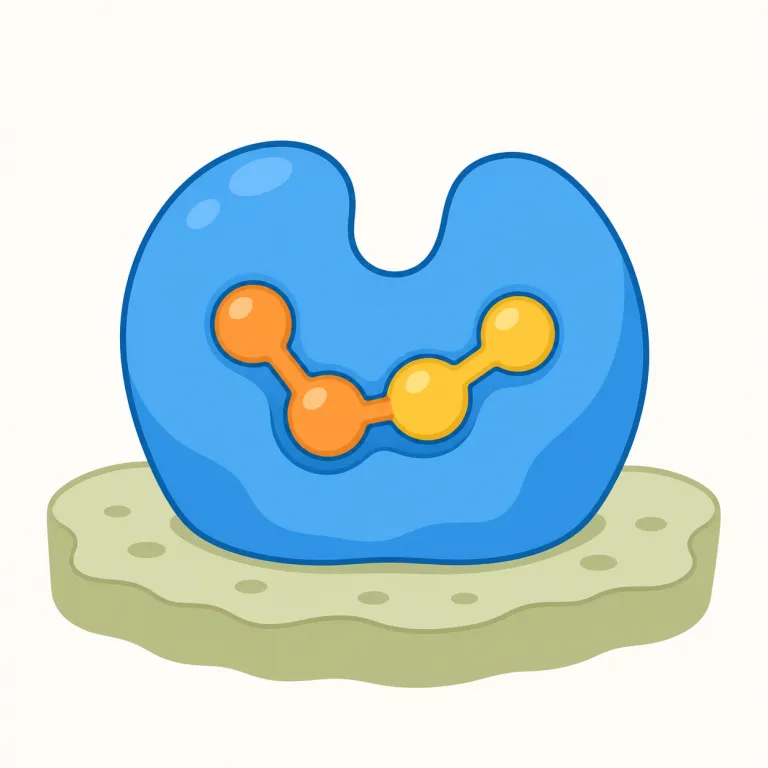
基質
解説 Definition
substrate は、ある反応や作用の土台となる物質・層・表面を指す語で、特に生化学では酵素が作用する対象の分子をいう。反応速度や結合のされ方を調べる文脈でよく使われ、現象が起こる基盤という含みをもつ。
A substrate is the basic substance or surface on which something grows, lives, or is attached. In biology and chemistry, it often means the substance that an enzyme or other process acts on.
覚え方のコツ Memory Tip
sub- は「下」、-strate は stratum に通じる「層・敷かれた面」と見ると覚えやすいです。substrate は直感的に「下にある土台の層」。そこから、生化学では酵素が作用する“相手の分子”を指し、材料科学では膜や部品が載る“基板”も表せます。分野が違っても共通イメージは「その上で何かが起こるベース」。substance のような“物質そのもの”ではなく、反応や作用を受ける側・支える側だと押さえると混同しにくいです。
The strongest memory pair is enzyme and substrate. When you see substrate, picture the molecule an enzyme grabs and works on. Keep it separate from product, which comes after the reaction.
例文
The enzyme works on the substrate to produce energy.
その酵素は基質に作用してエネルギーを生み出す。
The reaction slowed when the amount of substrate was reduced.
基質の量を減らすと、その反応は遅くなった。
Scientists studied how the substrate binds to the enzyme's active site.
科学者たちは、基質が酵素の活性部位にどのように結合するかを調べた。
substrate の類義語・関連語
substrate の語源・成り立ち Etymology
substrate はラテン語 substratum に由来し、sub-「下に」+ stratum「敷かれた層」から成る。strategy や street と同じく str- 系には「広げて敷く」感覚があり、下敷き・土台の意味につながる。
`Substrate` comes from Latin `substratum`, from `sub-` meaning "under" and `stratum` meaning "something spread or laid down." It originally had the sense of an underlying layer or base. The same root appears in English words like `stratum`, `street`, and `strategy`, all linked to the idea of spreading or laying out.
同じレベルの英単語をもっと
外部辞書で調べる
この単語を英単語クイズで覚えよう