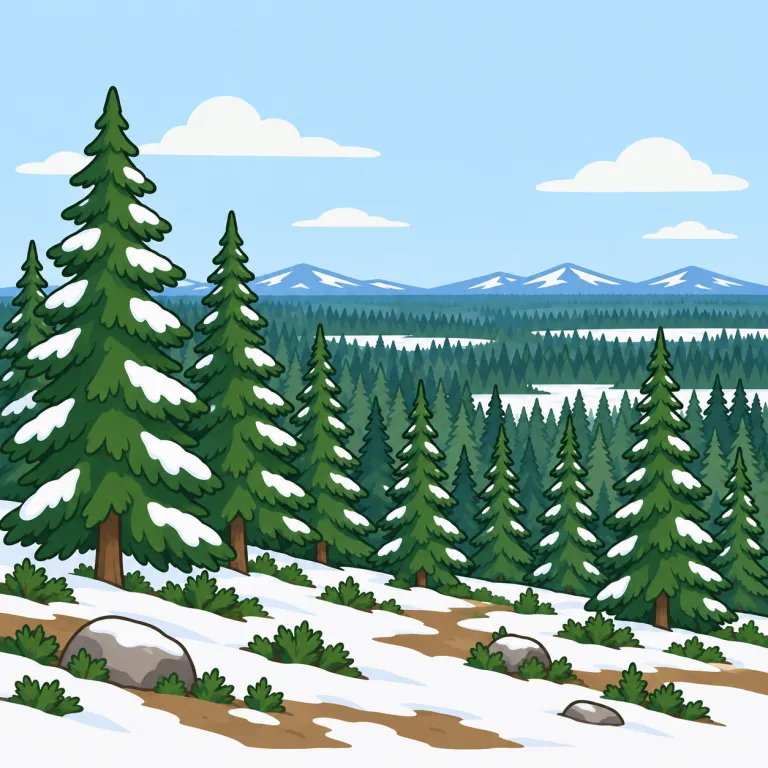
タイガ
解説 Definition
taiga は、北半球の寒冷地に広がる針葉樹林帯「タイガ」を指す地理・生態学用語です。
Taiga is the vast northern forest biome dominated mainly by cold-tolerant coniferous trees. It extends across subarctic regions of Eurasia and North America and typically has long winters and short summers.
使い方 Usage
覚え方のコツ Memory Tip
長い冬、常緑樹、森林火災を、北方に帯状に広がる森の景観として結び付けましょう。
Picture a broad belt of northern evergreen forest, linking long winters, evergreen trees, and forest fires in one landscape.
例文
The taiga has long winters and many evergreen trees.
タイガには長い冬があり、常緑樹が多く生えています。
Many animals in the taiga are adapted to cold weather.
タイガにすむ多くの動物は寒い気候に適応しています。
The class studied how fires can change the taiga landscape.
授業では、火災がタイガの景観をどのように変えるかを学びました。
taiga の類義語・関連語
類義語
紛らわしい語
taiga の語源・成り立ち Etymology
ロシア語тайга(タイガ)を経て英語に入った語で、元はテュルク諸語やモンゴル語で「森林」「山岳地帯」を意味する。シベリアの亜寒帯針葉樹林帯を指す地理用語として19世紀に定着した。関連語:tundra(ツンドラ、同じくロシア語経由)、steppe(ステップ)。
English borrowed taiga from Russian тайга. Russian in turn received the term from a language of northern or central Asia, although dictionaries differ over the exact source and route; Turkic and Mongolic connections are commonly proposed. In those traditions, related forms referred broadly to forested or mountainous country. During the nineteenth century, European geographical writing established taiga as a term for the extensive subarctic coniferous forests associated especially with Siberia.
同じレベルの語彙をもっと
外部辞書で調べる
この英単語をクイズで覚えよう