劇場公開で、映画館で
adverb 副詞映画が映画館で一般公開・上映される形を表す。be released theatrically の形が典型で、配信サービスやテレビだけで公開される場合との対比に用いられ、既存の「芝居がかって」とは意味が異なる。
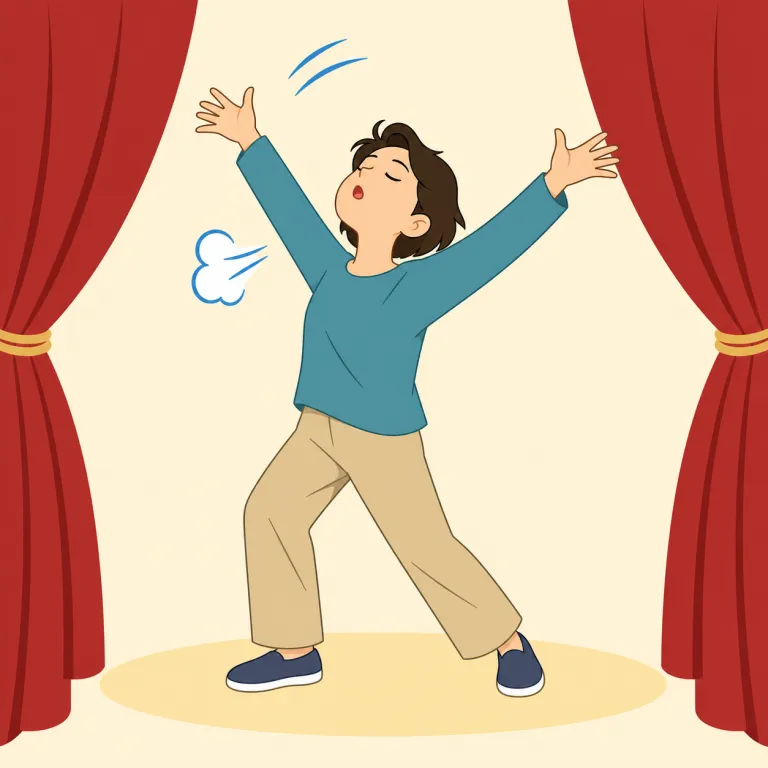
theatrically は、まるで舞台の演技のように、わざと人目を引く調子で大げさに振る舞うことを表す副詞。感情や反応を実際以上に強く見せたり、劇的な効果をねらって芝居がかった動作や間の取り方をしたりする場面で使われる。
The word theatrically means in a dramatic, exaggerated, or performance-like way. It is often used when someone speaks or behaves as if they are on a stage and want to attract attention. It can describe real theater, but it is also common for everyday behavior.
theatrical(芝居がかった)に -ly が付いた副詞だと押さえると覚えやすいです。核は『舞台の上の役者みたいに見せる』感覚で、自然に感情が出るのではなく、観客を意識して大きく表すイメージ。roll one’s eyes theatrically, sigh theatrically, pause theatrically のように、反応・しぐさ・間の取り方をわざとドラマチックにする場面でよく出ます。dramatically は変化の大きさにも使えますが、theatrically は『芝居っぽい振る舞い』に寄りやすいと区別すると残りやすいです。
Theatrically comes from theatrical, so picture a person acting on a stage. It is often used for gestures and reactions like sighing, pausing, or rolling your eyes in an exaggerated way. This helps separate it from dramatically, which can also describe a big change, not just actor-like behavior.
She theatrically threw her hands in the air and declared that she was done with the argument.
彼女は大げさに両手を振り上げ、もう議論は終わりだと宣言した。
He sighed theatrically, making sure everyone in the room noticed his displeasure.
彼は芝居がかってため息をつき、部屋の全員に自分の不満が伝わるようにした。
The politician theatrically paused before delivering the most dramatic line of his speech.
その政治家は、演説で最も印象的な一節を口にする前に、芝居がかった間を置いた。
文脈によって、次の意味でも使われます。
映画が映画館で一般公開・上映される形を表す。be released theatrically の形が典型で、配信サービスやテレビだけで公開される場合との対比に用いられ、既存の「芝居がかって」とは意味が異なる。
theatricallyはtheatrical + -lyで、語幹theatreはギリシャ語theatron「見る場所」がラテン語・フランス語を経て入った語です。もとは「見せる場」に関わる語なので、芝居がかった大げさな様子を表し、関連語にtheater、amphitheaterがあります。
Theatrically comes from theatrical + -ly. The root theatre came through Latin and French from Greek theatron, meaning "a place for viewing." Because it first referred to a place of public performance, the word later took on the sense of acting in a showy or dramatic way.
この英単語をクイズで覚えよう