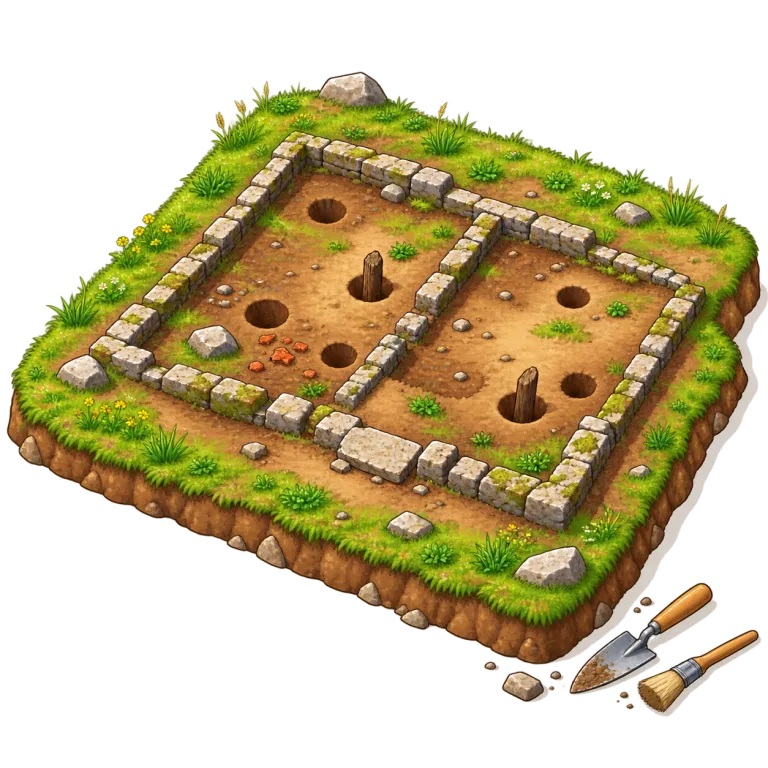
屋敷跡
解説 Definition
古い英語で家敷地、または農場の建設地。住居跡。
A toft is a piece of land where a house once stood, or in some contexts, a small raised area of ground. It is mainly used in historical, legal, or place-name contexts rather than everyday conversation.
覚え方のコツ Memory Tip
toft は「家そのもの」でなく「家が建っていた区画・跡地」を軸にすると覚えやすいです。house や home ではなく、site や plot に近い語だと整理すると混乱しません。地図・地名・古文書の中で『昔ここに家や農場があった』と示すラベルのような単語だと思うと定着します。意味の重心は建物より土地で、荒れた屋敷跡が少し盛り上がって小丘のように見える場面まで一緒に思い浮かべると強い記憶フックになります。loft と形が近いですが「屋根裏」ではない点に注意。
Remember that `toft` is closer to `site` or `plot` than to `house` or `home`. It points to the piece of land where a house or farm once stood, often in old records or place names. Picture an old house gone, but the ground still showing where it used to be. Its shape looks a bit like `loft`, but the meaning is completely different.
例文
The excavated toft revealed medieval settlement patterns.
発掘された屋敷跡から、中世の集落のあり方が明らかになりました。
The toft contained remains of ancient buildings.
その屋敷跡には古代の建物の遺構が残っていました。
Archaeologists found the foundations of a farmhouse on the toft.
考古学者たちは、その屋敷跡で農家の建物の基礎を発見しました。
toft の類義語・関連語
類義語
toft の語源・成り立ち Etymology
toftは古ノルド語toft「家の敷地・宅地」に由来し、北欧語の影響が強い語です。まず「家が建つ場所」を表し、そこから屋敷跡や小高い土地の意味にも広がりました。関連語にcroftが挙げられます。
Toft comes from Old Norse toft, meaning a house site or homestead plot. It first meant the piece of ground where a house stood, especially in areas shaped by Scandinavian settlement. Later, it could also refer to the remains of such a place or nearby raised ground. It is often compared with croft, another old land word.
同じレベルの語彙をもっと
外部辞書で調べる
この英単語をクイズで覚えよう