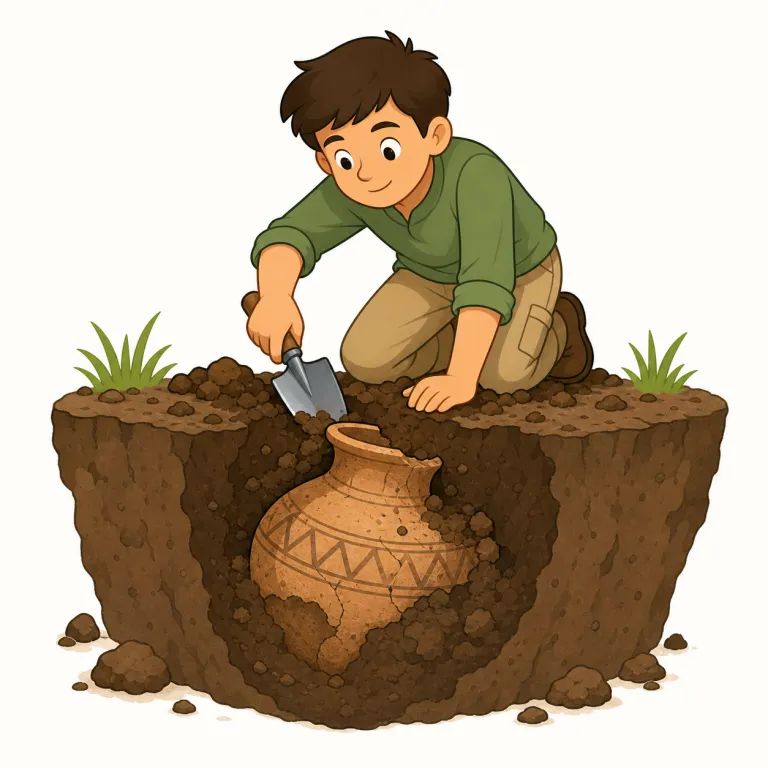
unearth
unearth は英検1級レベルの英単語で、「発掘する」という意味があります。発音記号は /ʌnˈɝθ/ です。
発掘する
解説 Definition
掘り起こすというのは、土や地面から何かを掘り出す、または隠れていたものを見つけ出すという意味の動詞です。過去の秘密や忘れられた情報を明らかにすることもあります。
To unearth means to dig something out of the ground, especially something hidden or buried. It can also mean to discover information, facts, or objects that were not known before. The word is common in archaeology, journalism, and investigations.
覚え方のコツ Memory Tip
unearth は earth「土」が見えるので、まず「土に関係する動作」と結びつけると覚えやすいです。さらに un- を「覆いを外す・表に出す」方向で捉えると、土の中から何かを出してくる絵が浮かびます。実物の発掘にも使えますが、unearthed evidence や unearth a secret のように、隠れていた証拠や秘密を明るみに出す意味でも頻出です。bury「埋める」の反対側、dig up に近いが少し書き言葉寄り、と並べて覚えると定着します。
You can see `earth` inside the word, so first imagine something hidden in the ground. `Unearth` suggests bringing it out into the open. That works for real digging, but also for hidden facts, as in `unearth evidence` or `unearth a secret`.
例文
Archaeologists unearthed ancient artifacts.
考古学者たちは古い遺物を掘り起こしました。
They unearthed evidence of the crime.
彼らは犯罪の証拠を見つけ出しました。
The investigation unearthed hidden truths.
その調査によって隠された真実が明らかになりました。
unearth の類義語・関連語
対義語
紛らわしい語
unearth の語源・成り立ち Etymology
un-「外へ・逆に」+ earth「土・地面」(古英語 eorthe / eorþe)から成る語。もとは「土の中から外へ出す」で、そこから「埋もれた物や事実を掘り出す」の意に広がった。関連語は earthy, earthquake。
Unearth is built from un- in the sense of "out of" or "reverse" and earth, from Old English eorthe, meaning "ground" or "soil." It first meant literally to dig something out of the ground. From there it broadened to mean bringing hidden things, such as objects or facts, to light; related words include earthy and earthquake.
同じレベルの語彙をもっと
英検1級の一覧へ →外部辞書で調べる
この英単語をクイズで覚えよう