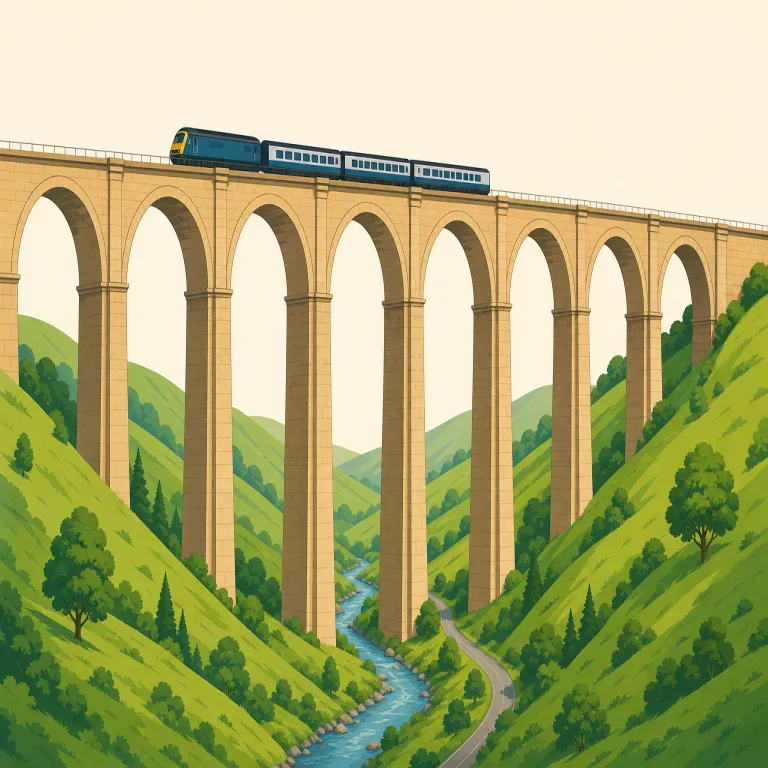
高架橋
解説 Definition
渓谷や川などの障害物を越えて道路や鉄道を通すために造られた高架橋を指す。複数のアーチや橋桁で支えられ、地表から離れて連続的に伸びるのが特徴で、長い距離も渡ることができる。線路や幹線道路のための交通用構造という意味合いで使われることが多い。
A viaduct is a long bridge that carries a road or railway over a valley, low ground, or other roads. It is usually built with a series of supports and is used in transport systems.
覚え方のコツ Memory Tip
via を『〜経由で』、duct を『通り道・何かを通すもの』くらいの感覚でまとめると、viaduct は『道や線路を上に通して向こうへ渡す構造物』とつかめます。bridge よりも、谷や道路の上を何本もの支柱やアーチで長く高く延ばす景色を思い浮かべると定着しやすい語です。railway viaduct のように鉄道文脈でよく見かけ、aqueduct が水を通すのに対し、viaduct は車や列車を通す、と対比すると混同しにくくなります。
Use the parts as a memory hook: `via` suggests a route or way, and `duct` suggests something that carries or leads. So `viaduct` gives the image of carrying a road or railway high across a space. It is easier to remember if you compare it with `aqueduct`: an aqueduct carries water, but a viaduct carries traffic.
例文
The new viaduct over the river cut travel time by half.
その川にかかる新しい高架橋のおかげで移動時間が半分になった。
Workers inspected the viaduct before the winter storms arrived.
冬の嵐が来る前に作業員たちは高架橋を点検した。
Visitors admired the ancient viaduct stretching across the gorge.
見物客たちは峡谷をまたぐ古代の高架橋を見て感嘆した。
viaduct の類義語・関連語
紛らわしい語
viaduct の語源・成り立ち Etymology
viaduct はラテン語 via「道」+ ducere「導く」由来の duct から成る近代語で、aqueduct を手本に作られました。直訳すると「道を通して導くもの」で、谷や道路の上に道筋を渡すので「高架橋」です。関連語は aqueduct, conduct。
Viaduct was formed in modern times from Latin via, "road," and duct, from ducere, "to lead." It was modeled on aqueduct, which helped shape its form. The original idea is "something that carries a road," and this developed into the modern sense of a bridge that carries a road or track across a gap.
同じレベルの語彙をもっと
外部辞書で調べる
この英単語をクイズで覚えよう