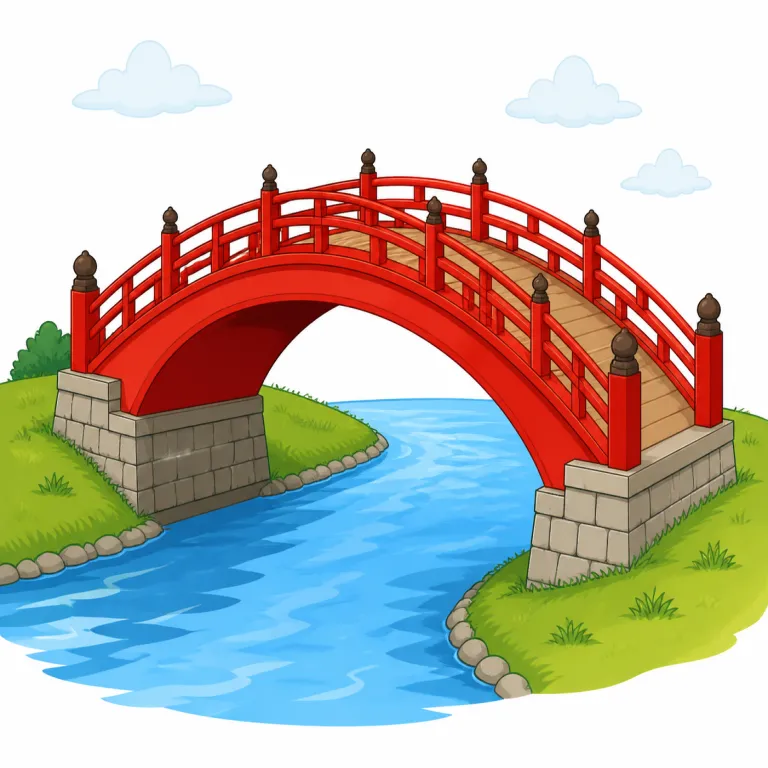
bridge
bridge は英検5級・英検7級レベルの英単語で、「橋、橋渡しする」という意味があります。発音記号は /ˈbrɪdʒ/ です。
橋
/ verb 動詞 橋渡しする
解説 Definition
川や道路、谷などをこえて、向こう側へ渡るために作られたものです。人や車、電車などがその上を通って移動できます。
A structure built over a river, road, valley, or other gap so people, cars, or trains can cross it.
覚え方のコツ Memory Tip
bridge はカタカナの「ブリッジ」と同じで、川のこちら側と向こう側を一本の道がつなぐ絵を思い浮かべると定着しやすいです。橋の上を端から端まで渡るなら walk across the bridge、橋が川をまたいでいるなら the bridge over the river という組み合わせが基本です。across は「一方の側から反対側へ」、over は「上に、上を越えて」という位置の違いに注目しましょう。船のように水の中を進むのではなく、人や車が高い所を通って障害物を越えるもの、と場面を固定すると迷いません。
Picture a road over water. A bridge helps you cross from one side to the other.
例文
This bridge goes over the river.
この橋は川に架かっています。
We walk across the bridge.
私たちは橋を歩いて渡ります。
The bridge is over water.
その橋は水の上にあります。
bridge の類義語・関連語
bridge の語源・成り立ち Etymology
古い英語の brycg から来た語です。昔から、水や谷などをこえて渡るための作り物を表す言葉として使われてきました。
Bridge comes from Old English brycg. It has long meant a structure used for crossing over water or a gap.
同じレベルの語彙をもっと
英検5級の一覧へ →外部辞書で調べる
この英単語をクイズで覚えよう