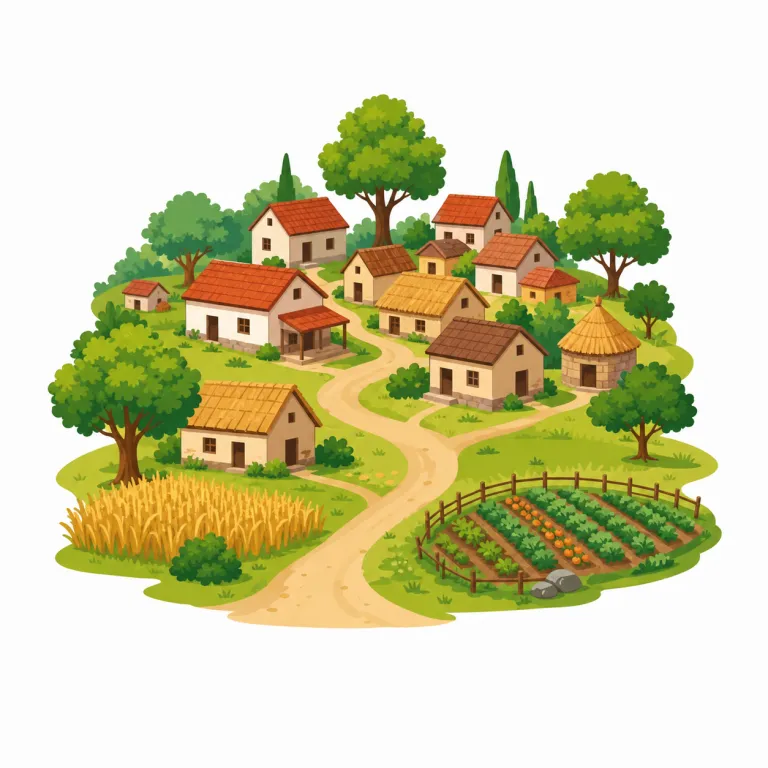
village
village はTOEIC 600レベルの英単語で、「村」という意味があります。発音記号は /ˈvɪlɪd͡ʒ/ です。
村
解説 Definition
「village」は田舎にある小規模な居住地を意味する名詞です。町よりも規模が小さく、自然や農作業と密接に結びついています。伝統的な共同体や都市化される前の生活様式を象徴することもあります。
A village is a very small community in the countryside, smaller than a town. The word is used for places where homes and local life are gathered in a limited area.
覚え方のコツ Memory Tip
village は、まず village people や village road のように『人や建物が少し集まった場所』の絵で覚えると残りやすいです。city や town より小さく、田舎・共同体の感じが強い語。形が似る villager は『村人』なのでセットで覚えると整理しやすくなります。travel to a village, live in a village のように前置詞は in がよく合い、『村という生活圏の中にいる』感覚で押さえると定着します。
Picture a village as a small place where a few homes and people are gathered together. It is smaller than a town or city and often gives a country or community feeling. Learn villager with it, so village is the place and a villager is a person from there.
例文
This village is very small.
この村はとても小さい。
Many people live in the village.
多くの人がその村に住んでいる。
A small road goes through the village.
小さな道がその村を通っている。
えいたんごクイズでの正答率
この語をはじめて出題された 37人 のうち 35人 が正解しました(95%)。
えいたんごクイズの回答から集計した独自データです。1人につき最初に出題されたときの1回だけを数えており、復習や2回目以降の回答、「わからない」と時間切れは含みません。 集計時点は 2026年9月19日 です。
village の類義語・関連語
village の語源・成り立ち Etymology
village は古フランス語 village、さらにラテン語 villa「田舎の家・農場」に由来します。語尾 -age は場所や集まりを表し、農家を中心に人が集まる場所が「村」になりました。villa や villain も同根で、村の語がもともと農村生活と結びついていたと分かります。
"Village" came through Old French from Latin "villa," meaning a country house, farm, or rural estate. The idea grew from a single rural property to a group of homes around such a place. Related words like "villa" and even "villain" come from the same root and show its old connection with country life.
同じレベルの語彙をもっと
TOEIC 600の一覧へ →外部辞書で調べる
この英単語をクイズで覚えよう