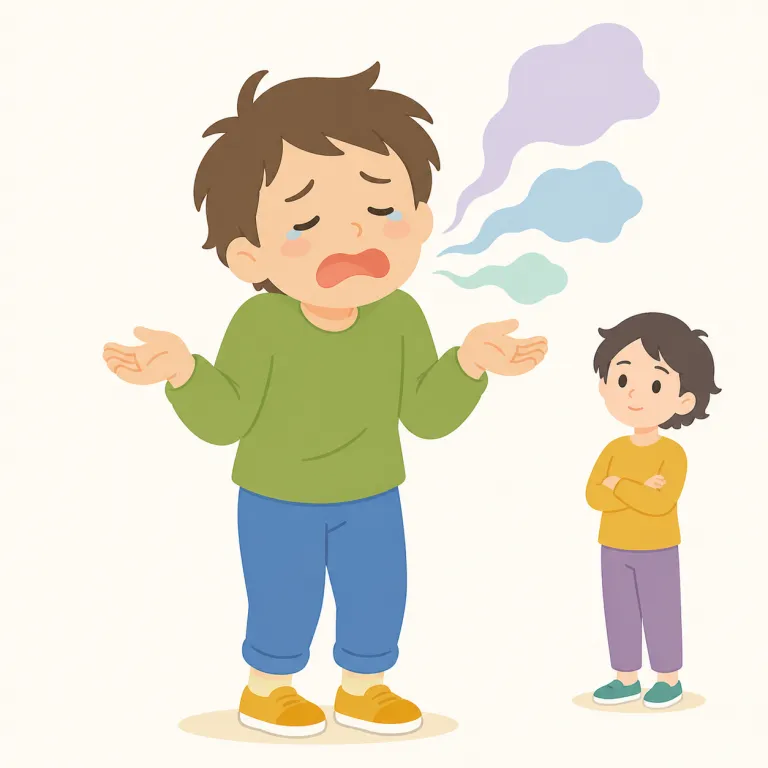
泣き言を言う
解説 Definition
くどくど泣き言を言ったり不平を述べたりすること。主にイギリス英語で使われる。
To whinge means to complain in an annoying, weak, or repeated way, often about small problems. It is an informal word used especially in British English. In American English, "whine" is more common and very similar in meaning.
覚え方のコツ Memory Tip
whine(鼻にかかった声でぐずぐず言う)を知っていると覚えやすい語。whinge はそれに近いが、特に「不満をくどくど言い続ける」感じが強く、主にイギリス英語。短く一度こぼす complain より、聞く側がうんざりする反復感がある。whinge about work / stop whinging のように、日常の愚痴場面でよく出る。whimper のような弱々しい泣き声そのものではなく、口で不平を続ける語。つづりは whine ではなく whinge で、語尾の -ge を見たら「英式の長い愚痴」と結びつけると残りやすい。
Remember it through `whine`, because the two words are close in sound and feeling. `Whinge` is stronger for repeated, annoying complaining, especially in British English. The spelling with `-ge` can remind you: this is not just one complaint, but drawn-out grumbling.
例文
Stop whingeing about the weather and just bring an umbrella.
天気のことでくどくど泣き言を言うのはやめて、傘を持っていきなさい。
He's always whingeing about how unfair his workload is.
彼はいつも仕事量が不公平だと泣き言を言っている。
The columnist wrote that politicians whinge about media coverage instead of addressing real issues.
そのコラムニストは、政治家は実際の問題に取り組む代わりにメディア報道について不平を述べると書いた。
whinge の類義語・関連語
類義語
派生語
紛らわしい語
whinge の語源・成り立ち Etymology
whinge は英国方言で、古英語 hwinsian「クンクン鳴く・不満げにうなる」に連なる語で、擬音的な響きが核にある。whine や whimper も近い仲間で、まず「鼻声でぐずる」音があり、そこから「泣き言を言う」へずれたと分かる。
Whinge comes from British dialect and is related to older sound-imitating words such as whine. It probably goes back to Old English hwinsian, meaning to whine or make a complaining sound. The sense moved from the sound of weak crying or grumbling to the act of complaining. Related words include whine and whimper.
同じレベルの語彙をもっと
外部辞書で調べる
この英単語をクイズで覚えよう