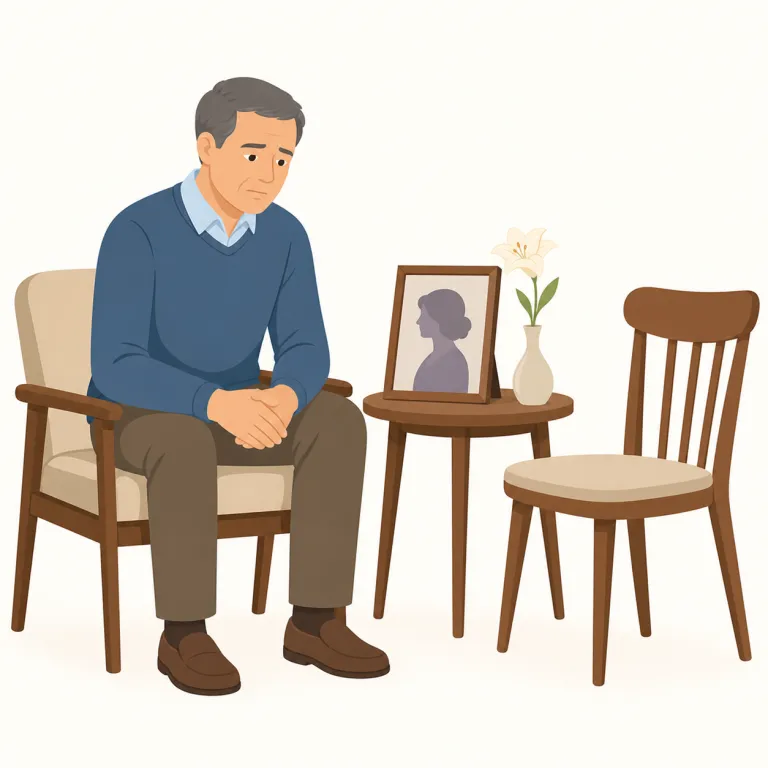
widower
widower はTOEIC 860・TOEFL 80・IELTS 6.5レベルの英単語で、「やもめ」という意味があります。発音記号は /ˈwɪdoʊər/ です。
やもめ
解説 Definition
妻を亡くし、現在再婚していない男性を指します。配偶者を亡くした後の生活や心境を説明する際に使う語です。
A widower is a man whose wife has died and who has not married again. This word is used when talking about family or personal status. It is the male form of widow.
覚え方のコツ Memory Tip
widow が「夫を亡くした女性」なら、widower はそこに -er がついて「その立場の男性」と対で覚えると区別しやすいです。意味は単なる unmarried man ではなく、「妻に先立たれ、その後も再婚していない男性」まで含むのがポイント。widowed は「配偶者を亡くした」という形容詞なので混同注意。a widower living alone, become a widower など、人を指す名詞として出る形をまとめて覚えると定着します。
Remember it next to `widow`. `Widow` is the female word, and `widower` is the male word, so learning them as a pair makes them easier to keep apart. Be careful not to mix it with `widowed`, which describes the state, not the person word.
例文
After his wife passed away, he became a widower.
妻が亡くなった後、彼は男やもめになりました。
The widower raised his children alone.
その男やもめは子どもたちを一人で育てました。
Many widowers find it difficult to adjust to living alone.
多くの男やもめは一人暮らしへの適応が難しいと感じています。
widower の類義語・関連語
紛らわしい語
widower の語源・成り立ち Etymology
widower は中英語 widwer を経て、古英語 wuduwa「妻を亡くした男」にさかのぼります。現代英語では widow + -er とも感じられ、さらに古い印欧語根には「引き離す」の発想があります。関連語は widow と widowed で、『伴侶と離れた人』が語の芯です。
Widower comes through Middle English from Old English wuduweard and related early forms meaning a man whose wife has died. It is closely connected with widow, and both go back to an old Indo-European root linked with separation or being left apart. The central idea is a person separated from a spouse by death.
この意味を学べる単語帳
widower の収録語義を確認して、まとめて学べる単語帳を選べます。
-
収録語義:やもめ
作成者:金子竜平
同じレベルの語彙をもっと
TOEIC 860の一覧へ →外部辞書で調べる
この英単語をクイズで覚えよう