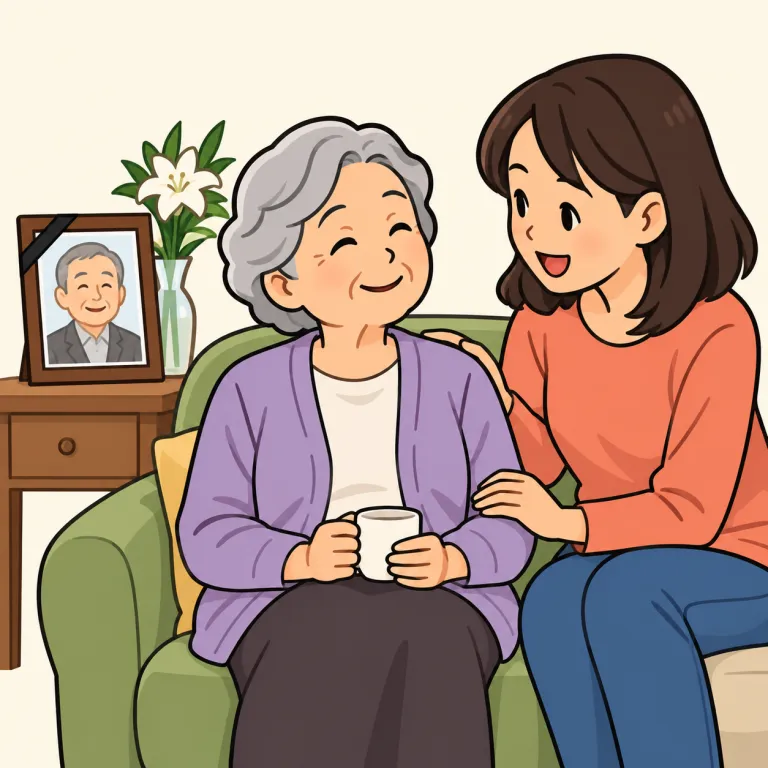
配偶者を亡くした
解説 Definition
widowed は、配偶者を亡くした状態を表す、過去分詞由来の形容詞です。女性にも男性にも使えます。
Widowed describes a person whose spouse has died and who has not remarried. As an adjective, it can refer to either a woman or a man, especially in phrases such as a widowed parent or in the expression become widowed.
使い方 Usage
使い分け Common distinctions
- 名詞 widow は通常女性、widower は男性を指しますが、形容詞 widowed は男女どちらにも使えます。 The noun widow usually refers to a woman and widower to a man, while the adjective widowed can describe either.
- divorced(離婚した)や separated(別居した)と異なり、widowed は配偶者との死別を表します。 Unlike divorced or separated, widowed specifically indicates that a person's spouse has died.
覚え方のコツ Memory Tip
widow に -ed を付けた形で、語尾は /d/ と発音します。「配偶者との死別後の状態」と結び付けて覚えましょう。
Widowed is widow plus -ed, pronounced with a final /d/. Link it with a person's status after the death of a spouse.
例文
Her widowed mother lives nearby.
彼女の母親は配偶者を亡くしており、近くに住んでいます。
The group offers support to widowed parents.
その団体は配偶者を亡くした親たちを支援しています。
He became widowed after many years of marriage.
彼は長年の結婚生活の後、配偶者を亡くしました。
widowed の類義語・関連語
類義語
対義語
紛らわしい語
widowed の語源・成り立ち Etymology
古英語 widewe(配偶者を失った者)から。印欧祖語 *widh-ewā(分かれた者)に由来し、語根 *widh- は「分離する」の意。ラテン語 vidua(寡婦)も同根で、英語 divide(分ける)とも遠縁。「分かたれた人」が原義。
Widowed is the past participle of the verb widow, used adjectivally. Widow comes from Old English widewe and ultimately belongs to an Indo-European word family associated with separation or being left apart. Related forms include Latin vidua, meaning a woman deprived of her husband. The ending -ed marks the resulting state: a person has lost a spouse and is therefore described as widowed.
同じレベルの語彙をもっと
外部辞書で調べる
この英単語をクイズで覚えよう