
applause
applause は英検2級・TOEFL 60・IELTS 5.5レベルの英単語で、「拍手、称賛、喝采」という意味があります。発音記号は /əˈplɔːz/ です。
意味一覧 (2件)
拍手
解説 Definition
拍手(はくしゅ)とは、掌を打ち合わせて音を出し、称賛や喜びを表現する行為です。パフォーマンスや成功を祝う方法として使われます。
Applause is the sound people make by clapping to show approval, enjoyment, or praise. It often happens after a performance, speech, or achievement. The word refers both to the clapping itself and to the support it expresses.
覚え方のコツ Memory Tip
まず `applaud`(拍手する)や `clap` を知っていれば覚えやすい語です。`applause` は単に手をたたく動作というより、演技・発表・スピーチのあとに観客から起こる「拍手・喝采」という名詞で使うのが基本。`a round of applause` で「ひとしきりの拍手」、`win/get/receive applause` で「拍手を受ける」。`clap` は一回一回の動作や動詞寄り、`applause` は称賛として会場に広がる拍手全体、と区別すると記憶に残ります。
Link it to `applaud`, the verb. `Applause` is the audience sound after a show or speech, often in the phrase `a round of applause`. `Clap` is one action; `applause` is the whole wave of clapping.
例文
The audience showed its joy with loud applause.
観客は大きな拍手で喜びを表した。
Her performance received warm applause.
彼女の演技には温かい拍手が送られた。
People welcomed the speaker with warm applause.
人々は温かい拍手で講演者を迎えた。
えいたんごクイズでの正答率
この語をはじめて出題された 51人 のうち 23人 が正解しました(45%)。
えいたんごクイズの回答から集計した独自データです。1人につき最初に出題されたときの1回だけを数えており、復習や2回目以降の回答、「わからない」と時間切れは含みません。 集計時点は 2026年9月19日 です。
称賛、喝采
(意味 2)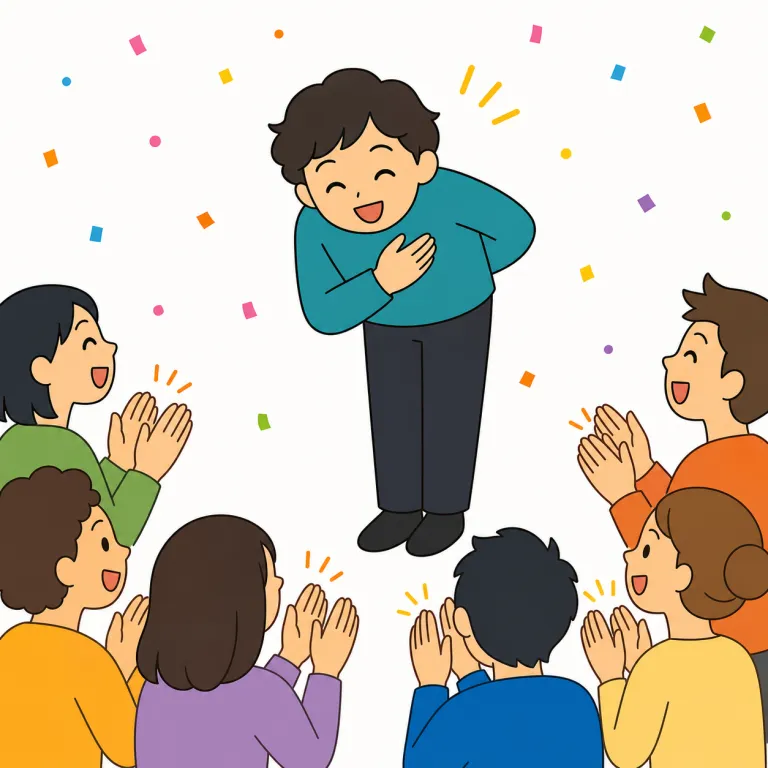
解説 Definition
applause は、行動や発言、成果などが高く評価されて受ける称賛や喝采を表す名詞です。実際に手をたたく場面に限らず、世論・観客・読者などから好意的に支持される文脈でも使われます。比喩的に、考え方や判断が広く評価されるときにも用いられます。
Enthusiastic praise or public approval for an action, statement, or achievement. It can describe a favorable response from audiences, readers, or the public even when nobody physically claps.
例文
Her speech won applause from many teachers.
彼女の演説は多くの教師から称賛を集めた。
The mayor's quick response drew applause from local residents.
市長の迅速な対応は地元住民の喝采を呼んだ。
The film received applause for its clear message.
その映画は、分かりやすいメッセージで称賛を集めた。
applause の類義語・関連語
applause の語源・成り立ち Etymology
applauseはラテン語applaudere「手を打って賛成する」に由来し、ad-「〜へ」+ plaudere「拍手する」が核です。applaudやplauditも同根で、相手に向かって手を打つ動作がそのまま「拍手喝采」の意味になりました。
Applause comes from Latin applaudere, meaning "to clap in approval." It is built from ad- "to" and plaudere "to clap." The idea was literally clapping toward someone to show support, and that became the general sense of public praise. English words like applaud and plaudit share the same root.
同じレベルの語彙をもっと
英検2級の一覧へ →外部辞書で調べる
この英単語をクイズで覚えよう