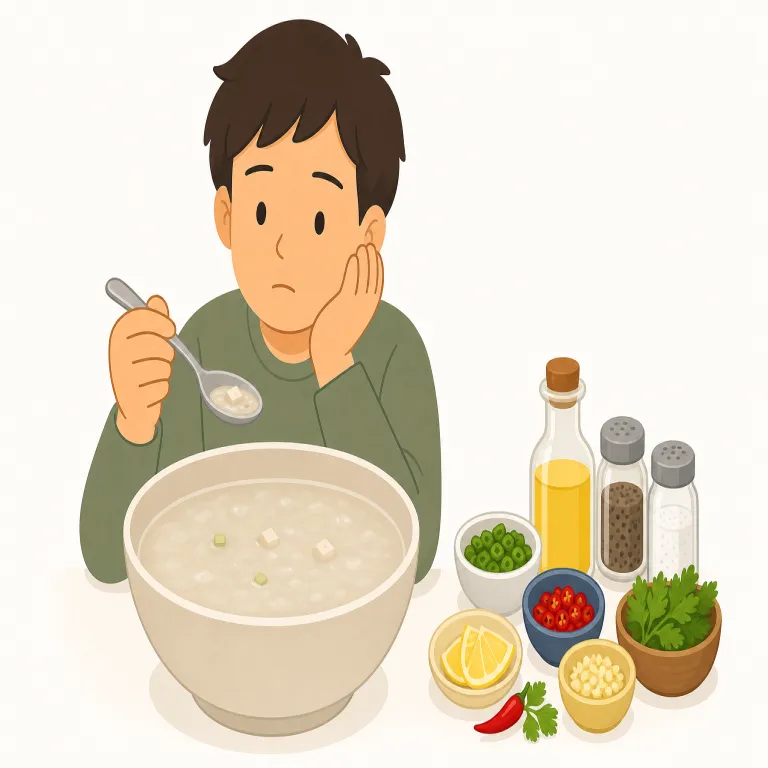
味気ない、刺激のない
解説 Definition
食べ物なら味や香りが弱くて物足りないこと、人や話し方、表現なら個性や刺激が乏しく印象に残らないことを表す形容詞。単に穏やかで無難というより、退屈で味気ない、面白みに欠けるという否定的な響きを伴うことが多く、味や内容の薄さが問題になる場面でよく使われる。
Bland means not having a strong taste, color, or character. It is often used to describe food that is mild and not spicy, but it can also describe something boring or not interesting. The meaning depends on the context.
覚え方のコツ Memory Tip
まず食べ物で固定すると覚えやすい。bland food は「辛くない」ではなく、味や香りのパンチが足りず物足りない感じ。そこから人・話・デザインにも広げて、bland personality, bland tone は「無難すぎて印象が薄い」。mild は単に刺激が弱いだけで中立なこともあるが、bland は退屈さまでにおうのが違い。plain と近いが、bland のほうが「魅力不足」を強く感じさせる。食べ物でも表現でも「刺激がなさすぎて記憶に残らない」とまとめると定着しやすい。
Start with food: bland food is not exciting, not rich, not memorable. Then extend that feeling to a bland personality or a bland tone. Mild can be neutral, but bland often suggests something is too plain to be interesting.
例文
The food was bland and tasteless.
その食べ物は味気なく、味がなかった。
His bland personality made him forgettable.
彼は平凡な性格で、印象に残らなかった。
The bland speech failed to inspire the audience.
その味気ないスピーチは聴衆を奮い立たせられなかった。
bland の類義語・関連語
bland の語源・成り立ち Etymology
bland はラテン語 blandus「穏やかな・人を和らげる」に由来し、もともとは相手をなだめるような“やわらかさ”が中心でした。分解しにくい語ですが、blandish や blandishment と並べると、「刺激がない」が「当たり障りがない」に変わった流れが見えます。
Bland comes from Latin blandus, meaning "mild," "gentle," or "soothing." It first suggested softness that could calm or please someone. Later, that sense of gentle smoothness shifted into the modern idea of something lacking strong taste, character, or excitement; compare blandish and blandishment.
同じレベルの語彙をもっと
外部辞書で調べる
この英単語をクイズで覚えよう