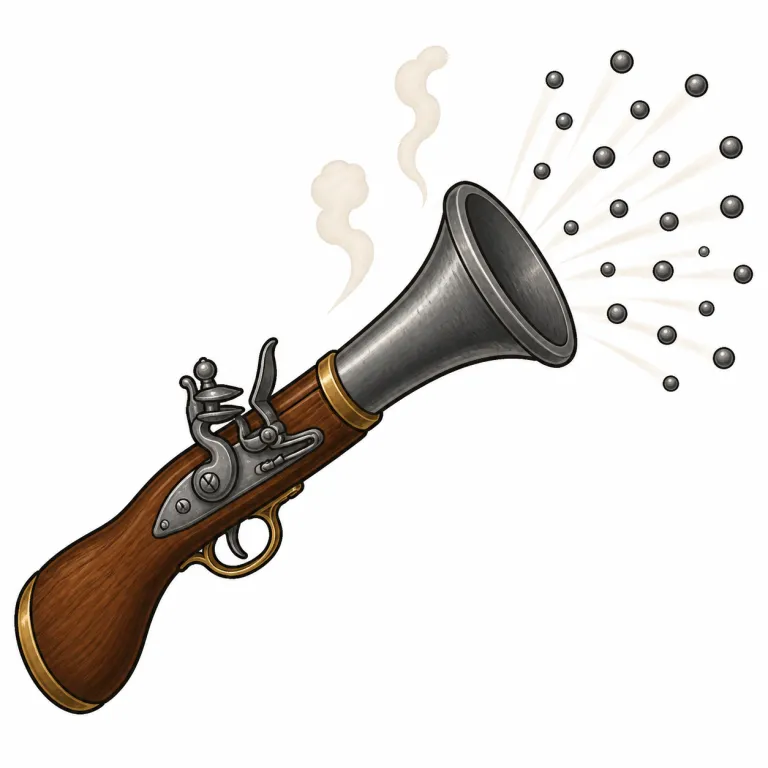
大ざっぱな手段、無差別な方法
noun 名詞比喩的に、狙いを細かく定めず、広い範囲へ一律に作用させる大ざっぱな手段ややり方を指す。精密さや選別を欠き、望ましくない影響まで及ぼすという批判的な含みで使われることが多い。
古い銃器で、複数の弾丸を広く散布して発射することができます。17世紀から18世紀に使用された歴史的な武器を指します。
A blunderbuss is an old type of gun with a short, wide barrel, designed to fire shot over a broad area. It is mostly seen in history, museums, or older stories. The word can also be used figuratively for something clumsy, rough, or not very precise.
まずは shotgun を基準に置くと覚えやすい語です。blunderbuss は現代的な散弾銃そのものというより、銃口が広がった古い大型銃で、近距離で弾を広くばらまく武器。記憶の上では blunder の「しくじる・雑にやる」という既知語の感触を借りて、「精密に狙う rifle の反対で、大ざっぱに面で当てる銃」と対比すると残ります。歴史小説や海賊ものに出る、古くて荒っぽい firearm という場面イメージまで一緒に固定すると忘れにくいです。
Remember it by contrast: a `rifle` is for careful aiming, but a `blunderbuss` sounds big, old, and rough. The word even feels clumsy because it starts with `blunder`, like a messy mistake. Picture a pirate-era gun that spreads shots widely instead of hitting one exact point.
The blunderbuss was a common firearm in the 17th century.
ブランダーバスは17世紀の一般的な銃器でした。
The blunderbuss fires shot in a wide spread.
ブランダーバスは散弾を広範囲に発射する。
Historical reenactors use replica blunderbusses.
歴史再現イベントの参加者はブランダーバスのレプリカを使用している。
文脈によって、次の意味でも使われます。
比喩的に、狙いを細かく定めず、広い範囲へ一律に作用させる大ざっぱな手段ややり方を指す。精密さや選別を欠き、望ましくない影響まで及ぼすという批判的な含みで使われることが多い。
blunderbuss はオランダ語 donderbus「雷の銃」が英語で形を変えた語で、donder は thunder と同じゲルマン系の『雷』、bus は『筒・銃』です。thunder や thunderbolt と並べると、発射音の轟きから名づけられた武器だと見え、散弾銃らしい荒っぽさが語源にそのまま残っています。
Blunderbuss came into English from Dutch donderbus, literally "thunder gun." The first part is related to English thunder, and the second meant a gun or tube. The name originally referred to the loud, explosive sound of the weapon, and English later reshaped the form into blunderbuss.
この英単語をクイズで覚えよう