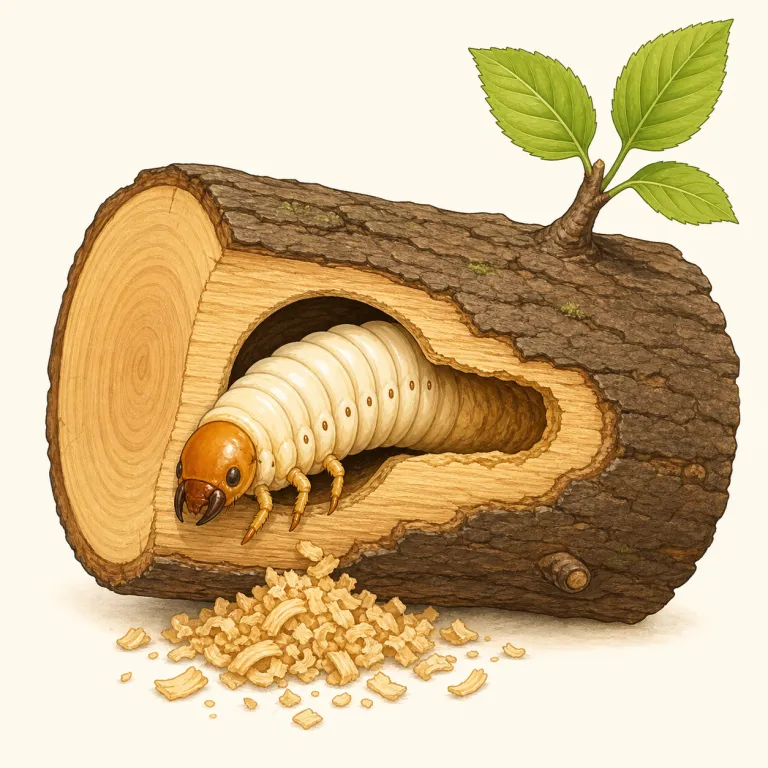
穴あけ工具、穿孔機
noun 名詞木工や土木などで、材料や地面に穴を開けるための工具または機械を指します。hand borer や tunnel borer のように複合語でも使われ、生物である穿孔虫を表す既存義とは区別されます。
木材や他の材料に穴を開ける昆虫。特に農業や林業で害虫とされることが多い穿孔性の昆虫を指す。
A borer is an insect, or the young form of an insect, that makes holes in wood, plants, or other material as it feeds. It is often used in farming, gardening, and biology. The word can also name a tool for making holes, but the insect meaning is common in natural contexts.
bore を「穴を開ける」として覚えておくと取りやすい語です。drill が道具や作業全体を連想させるのに対し、bore は“内部へぐっと穴を通す”感じ。そこに -er が付いて「穴を開けるもの・やつ」→ borer。wood-boring insect, stem borer など、木や茎に潜り込んで穴を作る害虫の場面でよく出ます。boring「退屈な」とつづりが近いので、意味は感情ではなく“穴あけ”側だと切り分けるのがコツです。
Start from `bore`, meaning to make a hole, then add `-er` for the thing that does it. In this sense, a `borer` is not a tool but an insect that digs into wood or stems. `Wood borer` and `stem borer` are useful phrases to lock it in.
The borer damaged the wooden furniture.
その穿孔虫は木製の家具を傷つけた。
The borer tunneled through the wooden support beam.
その穿孔虫は木製の支持梁の中を掘り進んだ。
The timber was infested with wood borers.
その材木は穿孔虫の被害を受けていた。
文脈によって、次の意味でも使われます。
木工や土木などで、材料や地面に穴を開けるための工具または機械を指します。hand borer や tunnel borer のように複合語でも使われ、生物である穿孔虫を表す既存義とは区別されます。
borer は Old English 由来の bore「穴をあける」に、行為者を示す -er が付いた語です。bore や boring と同根で、意味の核は一貫して「回して穴を通すこと」なので、虫の名でも“退屈”ではなく穿孔動作が中心だと見えてきます。
Borer comes from the Old English verb bore, meaning "to make a hole," with the agent ending -er. The central idea has always been drilling or piercing. That is why the word can name both a tool and an insect that makes holes. It is related to bore and boring.
この英単語をクイズで覚えよう