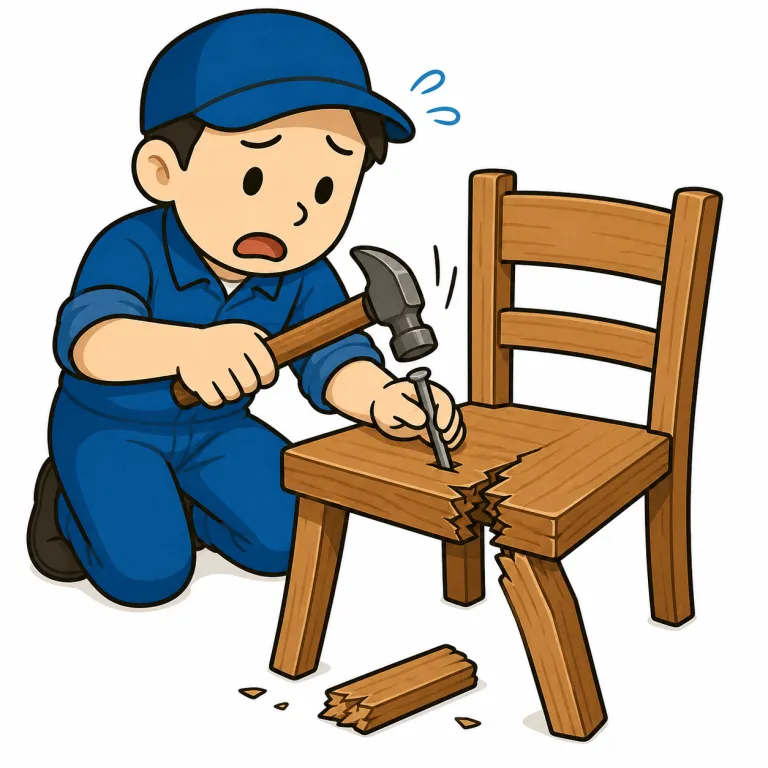
へまをすること、台無しにすること
解説 Definition
botching は、作業や計画などをへまして台無しにすることを表す語です。単に失敗するだけでなく、やり方がまずかったり注意が足りなかったりして、結果を悪くしてしまうという非難の響きを含みます。
Botching is the act of doing a job badly or in a careless way so that the result is spoiled. It is used when mistakes, poor skill, or bad planning cause something to go wrong.
覚え方のコツ Memory Tip
botching はまず動詞 botch を核に覚えるとよい。意味は「雑にやって台無しにする」で、単なる fail よりも「やり方が悪くて失敗」の非難が強い。botched surgery, botched repair, botched plan のように、手術・修理・計画など本来きちんとやるべき作業とよく結びつく。bungle や mess up に近いが、botch は「仕上がりがひどい」感じが強い。-ing が付くと行為そのものを表し、the botching of the job なら「その仕事をへましたこと」と捉えられる。
Start with the verb `botch`, then `botching` is the action of doing it. English often uses it with jobs that should be done carefully: `botched surgery`, `botched repair`, `botched plan`. That pattern helps you remember it is a careless, badly done mistake, not just any failure.
例文
Botching the repair made the damage even worse.
修理をへましたせいで、被害はさらにひどくなった。
His botching of the order upset the customer.
彼が注文対応をしくじったことで、その客は腹を立てた。
The article criticized the government's botching of the response.
その記事は、政府が対応をしくじったことを批判した。
botching の類義語・関連語
類義語
対義語
派生語
紛らわしい語
botching の語源・成り立ち Etymology
botching は中英語 botch「雑につくろう」に進行・動名詞の -ing が付いた形です。語源は未詳ですが、古フランス語 boce/boche「こぶ・ふくらみ」に結びつける説があり、元の「きれいでない繕い」から「へまをして台無しにする」へ発展しました。関連語は botched、botcher です。
Botching comes from botch with the ending -ing. Botch goes back to Middle English and first meant to repair or patch something in a rough, clumsy way; it may be linked to Old French words like boce or boche, meaning a swelling or lump. From the idea of a badly done patch, the meaning developed into spoiling work through poor handling. Related words are botched and botcher.
同じレベルの語彙をもっと
外部辞書で調べる
この英単語をクイズで覚えよう