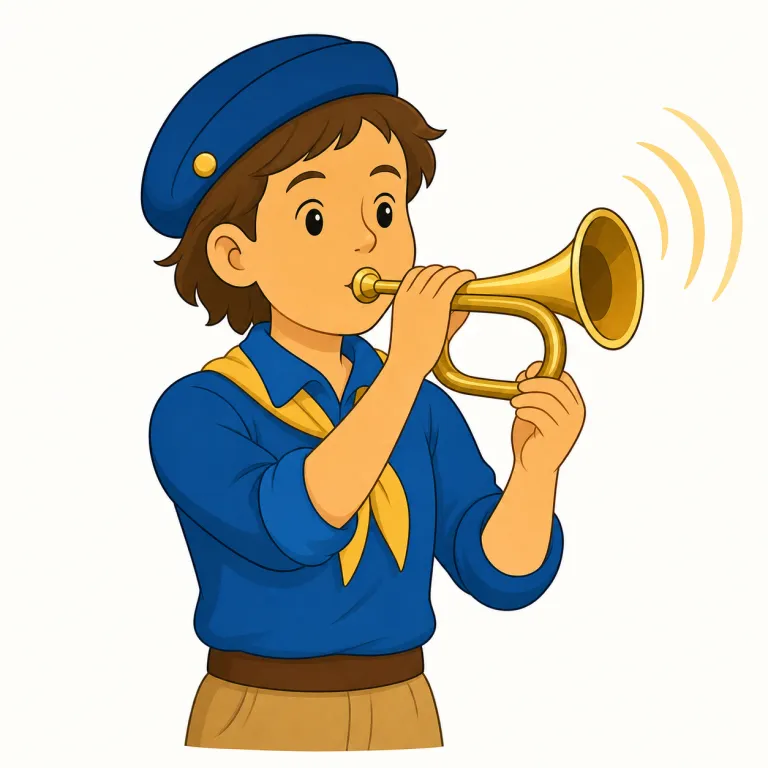
ラッパ手
解説 Definition
ラッパを吹く人のこと。特に軍隊やマーチングバンドなどで、ラッパで信号や行進曲を演奏する奏者を指します。兵士の起床や集合などの指示を伝える重要な役割を担っています。
A bugler is a person who plays the bugle, a simple brass instrument. A bugler often gives signals or performs at military and ceremonial events. Usage note: this word is most common in military, historical, or formal contexts.
覚え方のコツ Memory Tip
bugler は bugle(ラッパ)+ -er(〜する人)と分けると覚えやすいです。singer, drummer, runner と同じく「名詞や動詞に -er を付けてその人を表す」型の語だと押さえると、bugle を扱う人だとすぐ取れます。特に軍隊では bugle call を鳴らして合図を送る人として出やすく、単なる演奏者というより「音で知らせる役」のイメージが強めです。trumpeter と違って、儀礼・号令の場面を連想すると定着しやすく、bug と見間違えないことも大事です。
Break it into `bugle` + `-er`, the same people-word pattern as `singer` or `drummer`. That makes `bugler` easy to store as “the person with the bugle.” It is especially helpful to connect it with army scenes and `bugle calls`, not just general music performance.
例文
The bugler sounded the morning reveille to wake the soldiers.
ラッパ手は朝のラッパを吹いて兵士たちを目覚めさせました。
During the ceremony, the bugler sounded a solemn bugle call.
式典の間、ラッパ手は厳かなラッパの音を響かせました。
The young bugler practiced his instrument every morning.
その若いラッパ手は毎朝楽器の練習をしました。
bugler の類義語・関連語
bugler の語源・成り立ち Etymology
bugler は bugle「角笛・ラッパ」に、人を表す -er が付いた語。bugle は古フランス語を経てラテン語 buculus「若い雄牛」にさかのぼり、牛角の楽器が背景にある。bugle や bovine と並べると、ラッパ手の語に牛のイメージが潜む。
Bugler comes from bugle plus the agent suffix -er, meaning a person who plays the instrument. Bugle came through French from Latin roots connected with buculus, "young bull," because early horns were made from animal horns. The word therefore carries an old image of a horn instrument made from a bull’s horn. A related English word is bovine, from the same Latin family.
同じレベルの語彙をもっと
外部辞書で調べる
この英単語をクイズで覚えよう