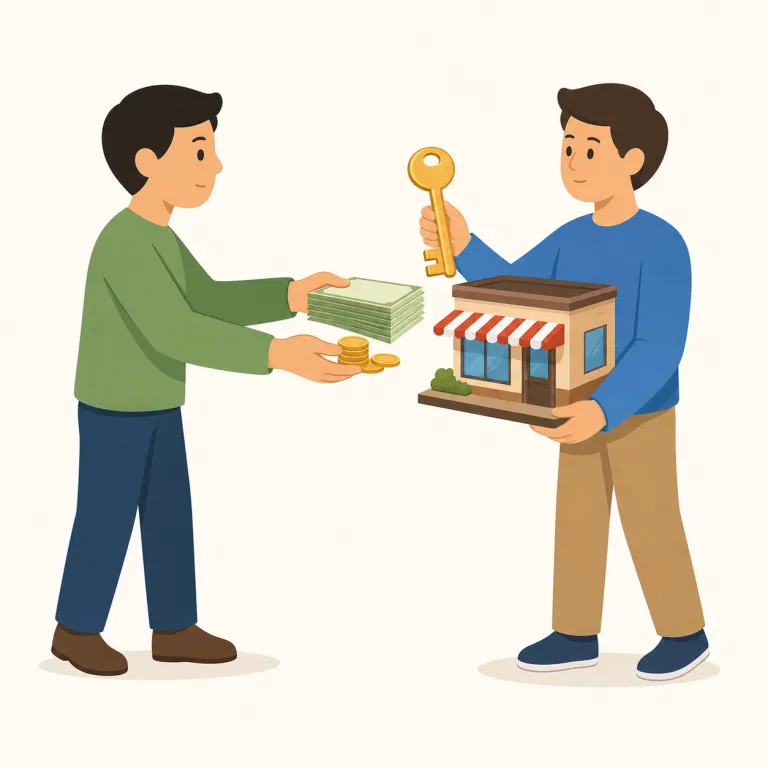
buy out
buy out は英検1級レベルの英単語で、「買い取る」という意味があります。発音記号は /ˌbaɪ ˈaʊt/ です。
買い取る
解説 Definition
企業や投資家が事業・株式などのすべてを買い取って支配権を得るときに使われます。少数株主や競合企業から完全に所有権を引き継ぐというビジネスの文脈で頻繁に登場します。買収や資本政策の説明でも一般的な表現です。
To buy all of a company, business, or another person’s share of it so that they no longer own any part. It is mainly used in business and financial contexts. It can also mean paying someone so they leave an agreement or position.
覚え方のコツ Memory Tip
buy は「買う」、out は句動詞で「外へ」より「全部・完全に」の感覚になることが多いので、buy out は「持ち分を全部買って相手を外に出す」と捉えると残りやすい。日用品を買う buy ではなく、会社・株式・権利を対象にするのが典型で、少数株主を buy out する、創業者が bought out される、のように使う。buy up は買い集める、take over は経営を引き継ぐ全般で、buy out はお金を払って完全取得する点が核。management buyout も一緒に覚えると定着しやすい。
In phrasal verbs, `out` often gives the idea of completely or fully. So `buy out` is not just buying something, but buying all of it so the other side is out. That is why it is common with shares, companies, or ownership rights. Compare it with `buy up`, which means buying many things, not necessarily taking full control.
例文
The larger company bought out the startup to acquire its technology.
大手企業は技術を手に入れるためにそのスタートアップを買い取りました。
They bought out the remaining shareholders to take full control of the company.
会社を完全に掌握するために、彼らは残りの株主から株式を買い取りました。
buy out の類義語・関連語
buy out の語源・成り立ち Etymology
buy out の buy は古英語 bycgan「買う」に由来し、out は『外へ』よりも『すっかり・完全に』の強調です。つまり『相手の持ち分を全部買ってしまう』が原義で、企業買収や権利の買い取りに使われます。関連語に buyer、purchase があります。
"Buy" comes from Old English bycgan, meaning "to purchase," while "out" here adds the sense of completeness rather than simple direction. So "buy out" originally meant buying all of something, especially another person's share or rights. The phrase later became common in business for taking full control by purchase.
同じレベルの英単語をもっと
英検1級の一覧へ →外部辞書で調べる
この単語を英単語クイズで覚えよう