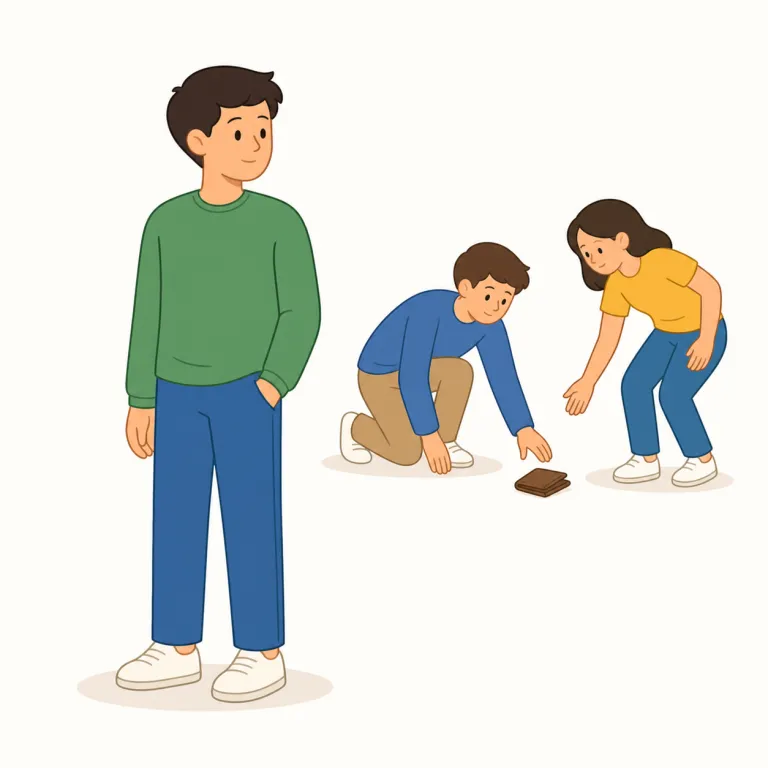
bystander
bystander は英検準1級レベルの英単語で、「傍観者」という意味があります。発音記号は /ˈbaɪstændər/ です。
傍観者
解説 Definition
事件や出来事に直接関わらずに見ている人。責任を持たない観客の立場にある者です。
A bystander is a person who is present when something happens but does not take part in it. The word is often used for accidents, fights, crimes, or other public events. It can suggest someone is only watching, not helping or acting.
覚え方のコツ Memory Tip
by は「そばで」、stand は「立つ」と押さえると、出来事の中心に入らず脇に立って見ている人の絵が浮かびます。参加者・被害者・加害者ではなく、外側にいるのが核心。witness は目撃して証言するニュアンス、onlooker は見物人寄りですが、bystander は偶然その場にいて関わっていない人に広く使えます。accident の現場や bystander effect と結びつけると覚えやすいです。
See it as by + stand: someone standing by the side. A bystander is near the event, but not part of it. Think of an accident scene or the phrase bystander effect.
例文
Several bystanders witnessed the accident but didn't help.
複数の傍観者が事故を目撃しましたが、助けませんでした。
As a mere bystander, I didn't feel responsible for the situation.
単なる傍観者として、私はその状況に責任を感じませんでした。
The bystanders recorded the incident on their phones.
傍観者たちは携帯電話でその事件を記録しました。
bystander の類義語・関連語
対義語
紛らわしい語
bystander の語源・成り立ち Etymology
bystander は by「そばに」+ stand「立つ」+ -er で、語源は Old English 系です。stand や understand と同じ stand を含み、「その場の脇に立って見ている人」から傍観者になる語です。
Bystander is built from by, stand, and the suffix -er, all from Old English roots. It is related to stand and understand, which share the same main root. The original image is of a person standing nearby, and this developed into the sense of someone who watches without taking part.
同じレベルの語彙をもっと
英検準1級の一覧へ →外部辞書で調べる
この英単語をクイズで覚えよう