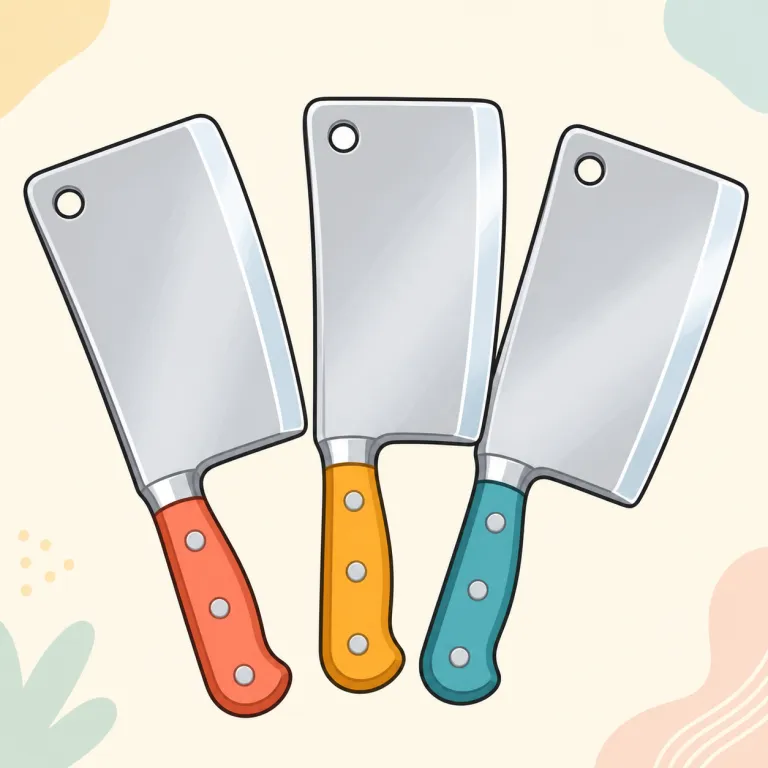
ヤエムグラ、くっつき草
noun 名詞英国英語を中心に、衣服や動物に鉤状の毛で付着するアカネ科の植物を指します。通常は複数形扱いの植物名として用いられ、刃物である cleaver の複数形とは文脈で区別されます。
肉や骨を切ったり砕いたりするための大きく扁平な刃を持つ調理道具。肉屋やプロの台所で使われる必須の道具。
Cleavers are large, heavy knives with a wide blade, mainly used for cutting meat or bones in a kitchen or butcher shop. They are designed for strong, forceful chopping rather than fine cutting. The singular form is "cleaver."
覚えるときは、ふつうの knife ではなく「肉屋で bone までたたき切る、幅広で重い包丁」という場面で固定すると残ります。meat cleaver / butcher’s cleaver という組み合わせで見ることが多く、slice(薄く切る)より chop(たたき切る)側の道具です。clever(賢い)とつづりが近いので混同しやすいですが別語。複数形なら、台所や店先に何本も並ぶ cleavers を思い浮かべると定着しやすいです。
Think of `cleaver` first: a big heavy knife used by a butcher. `Cleavers` is just the plural, so imagine several of those thick meat-cutting knives hanging in a shop. It often appears in phrases like `meat cleaver`, and it is not related to `clever`.
The butcher used large cleavers to chop the meat.
肉屋は肉を切るために大きな肉切り包丁を使いました。
These cleavers are essential tools in any professional kitchen.
これらの肉切り包丁は、どのプロの厨房にも欠かせない調理道具です。
She sharpened the cleavers before preparing the roast.
彼女はロースト料理の下ごしらえをする前に肉切り包丁を研ぎました。
文脈によって、次の意味でも使われます。
英国英語を中心に、衣服や動物に鉤状の毛で付着するアカネ科の植物を指します。通常は複数形扱いの植物名として用いられ、刃物である cleaver の複数形とは文脈で区別されます。
cleavers は「切り裂く」を表す古英語 clēofan 由来の cleaver に、複数の -s が付いた形です。cleave + -er で本来は「割る道具」を意味し、骨や肉を断つ包丁の名になりました。関連語は cleave, cleavage です。
Cleavers is the plural of cleaver, from cleave with the agent ending -er. Cleave comes from Old English cleofan, meaning to split or cut apart. The word first meant a tool for splitting, and later became the name of the heavy cutting knife. A related English word is cleavage.
この英単語をクイズで覚えよう