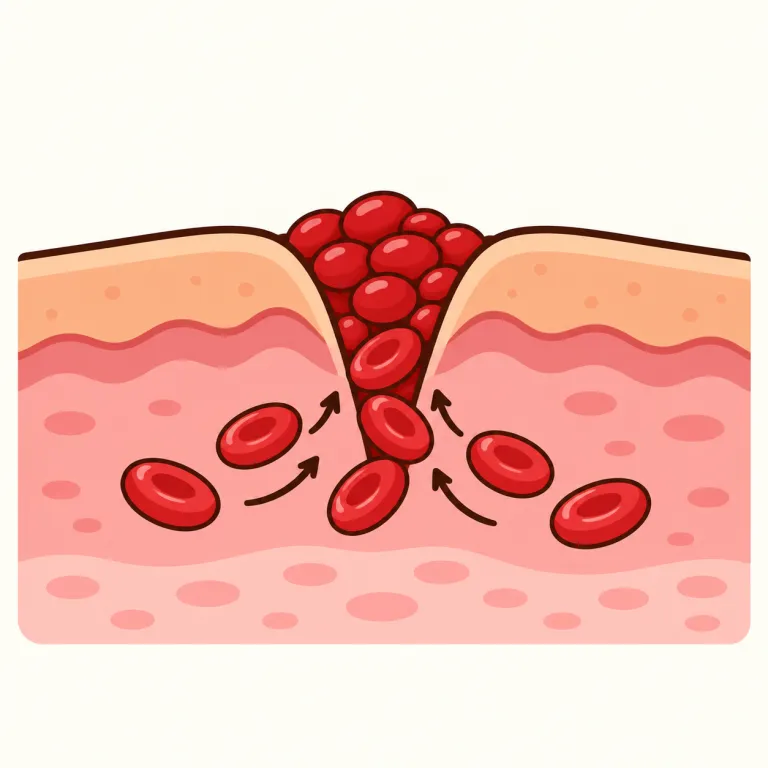
凝固
解説 Definition
clotting は clot(固まる、凝固する)の動名詞で、血液などが固まること、つまり凝固を意味する名詞として使われます。医学や生物の文脈で、血液の固まり方を説明するときによく使います。
Clotting is the process by which blood or another liquid thickens and forms a semisolid mass. In medical and biological contexts, blood clotting is a protective mechanism that helps limit bleeding after a blood vessel is damaged.
覚え方のコツ Memory Tip
clotting は原形 clot「血などが固まる」の動名詞で、短母音の後の語末 t を重ねて -ing を付け、clotting /ˈklɑːtɪŋ/ などとなります。blood clotting「血液凝固」を中心に、液体の血が clot「塊」を作って出血を止める過程だと結び付けて覚えましょう。
Start with clot, a noun for a thick lump and a verb meaning “form such a lump.” When -ing is added, the final t is doubled after the short stressed vowel: clot becomes clotting, pronounced /ˈklɑːtɪŋ/ in much American English. Picture liquid blood changing into a thicker mass that seals a damaged vessel. The fixed combination blood clotting will anchor the medical sense. A clot is the resulting mass, while clotting names the process, so “slow clotting” means that this protective process takes longer than normal.
例文
Blood clotting helps stop bleeding.
血液の凝固は出血を止める助けになります。
The test checks whether clotting happens normally.
その検査では、凝固が正常に起こるかを調べます。
The doctor explained that slow clotting could make small cuts bleed longer.
医師は、凝固が遅いと小さな切り傷でも出血が長引くことがあると説明しました。
clotting の類義語・関連語
派生語
紛らわしい語
clotting の語源・成り立ち Etymology
clotting は古英語 clott「塊・固まり」に由来する clot に、動作・状態を表す接尾辞 -ing が付いた語です。血などがばらばらでなく一つの塊になる感覚が「凝固」へつながります。関連語は clot, clod。
Clotting is formed from clot with the suffix -ing; the final t is doubled according to the regular spelling pattern for a stressed short vowel followed by one consonant. Clot is recorded in Old English as clott, meaning a lump or compact mass, and is related to words for rounded masses of earth. Its basic image of material gathering into a lump developed into the medical verb for blood becoming thick and semisolid.
同じレベルの語彙をもっと
外部辞書で調べる
この英単語をクイズで覚えよう