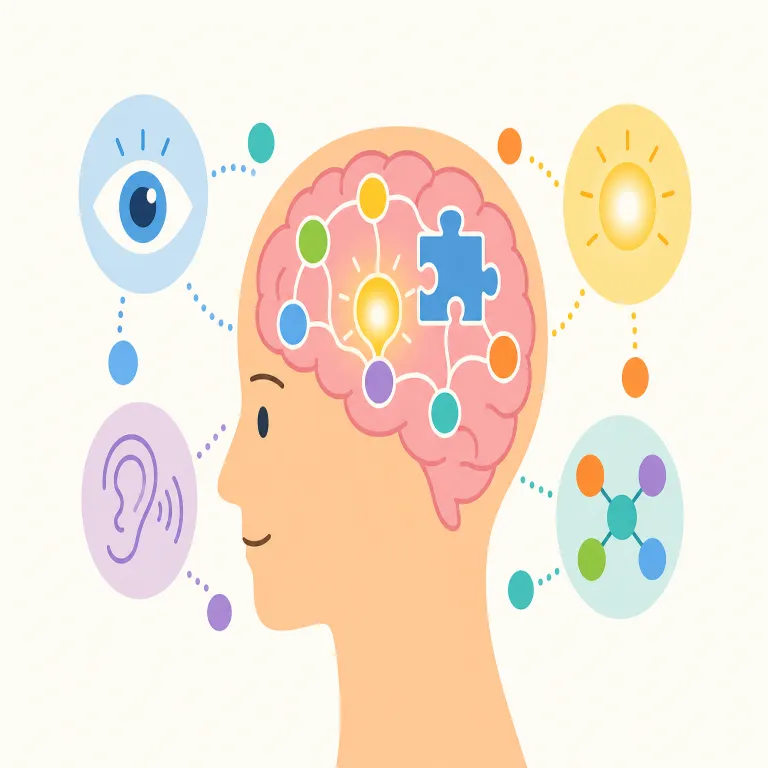
cognition
cognition は英検準1級・TOEFL 100・IELTS 7.5レベルの英単語で、「認知」という意味があります。発音記号は /kɑːɡˈnɪʃən/ です。
認知
解説 Definition
認知とは、知覚・記憶・思考・判断などを通じて情報を処理する精神的なプロセスのことです。人間がものごとを理解し、学習し、問題を解決するための基本的な能力です。心理学や神経科学の分野でよく研究されるテーマです。
Cognition is the mental process of thinking, learning, understanding, remembering, and noticing things. It is often used in psychology and education when talking about how the mind receives and uses information.
覚え方のコツ Memory Tip
cogni- を recognize, cognitive, incognito と同じ「認識する」系のまとまりで覚えると定着しやすい語です。よく出るのは cognitive function, human cognition などで、心理学・脳科学では knowledge のような単なる「知識」ではなく、「見て気づく→覚える→考える→判断する」という情報処理全体を指します。recognition が「認識した結果」、perception が「知覚」に寄りやすいのに対し、cognition はその後まで含む広い心の働き、と比べると混同しにくくなります。
The `cogni-` part connects it to words like `cognitive` and `recognize`, so it belongs to the knowing and thinking family. `Cognition` is broader than simple knowledge: it covers noticing, remembering, thinking, and judging. Remember it in common phrases like `human cognition` or `cognitive function`.
例文
The study of cognition helps us understand how the brain processes information.
認知の研究は、脳が情報をどのように処理するかを理解するのに役立ちます。
Aging can affect cognition, including memory and problem-solving abilities.
加齢は記憶や問題解決能力など、認知に影響を与えることがあります。
Researchers are investigating how sleep deprivation impairs cognition.
研究者たちは、睡眠不足がどのように認知を低下させるかを調査しています。
cognition の類義語・関連語
類義語
cognition の語源・成り立ち Etymology
cognition はラテン語 cognitio に由来し、co-「共に」+ gnoscere「知る」から成る。ばらばらの情報をつなげて『知る・認識する』感覚が核で、recognize や incognito に同じ語根が見える。
Cognition comes from Latin cognitio, from co- and a verb meaning "to know" or "to come to know." The root sense is gathering things together in the mind and recognizing them as known. From that, the word developed the meaning of mental processes of knowing and understanding. Related words with the same root include recognize and incognito.
同じレベルの語彙をもっと
英検準1級の一覧へ →外部辞書で調べる
この英単語をクイズで覚えよう