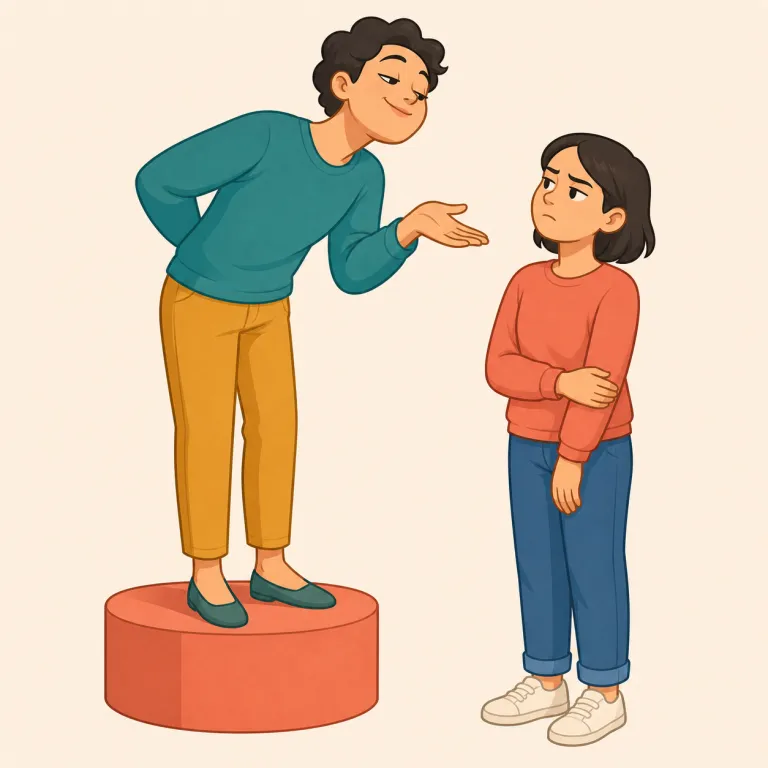
見下した態度、尊大さ
解説 Definition
相手を自分より下だとみなし、上から目線で接する態度や話し方を指す名詞です。露骨な侮りだけでなく、親切そうに見えても相手を子ども扱いするような尊大さを含むことがあり、会話や職場で不快感を与える原因になります。
Condescension is a way of speaking or behaving that shows you think you are better or more important than others. It often sounds polite on the surface but feels insulting or disrespectful. The word is commonly used when describing tone or attitude.
覚え方のコツ Memory Tip
まず動詞 condescend「人を見下した物言いをする」を核にすると覚えやすいです。語尾 -ion が付いて「態度・性質」を表す名詞になり、condescension は“一言の悪口”ではなく、会話全体ににじむ上から目線の感じ。露骨な insult より、親切そうでも相手を対等に扱わない尊大さがポイント。a tone of condescension のように、話し方・接し方への不快感と結びつけると定着します。
Start with condescend, then add -ion for the attitude or behavior: condescension. It is not just open insult, but a polite-sounding way of treating someone as lower than you. The phrase "a tone of condescension" is a strong memory hook.
例文
His condescension toward the younger staff members made them feel uncomfortable.
若い職員に対する彼の見下した態度は、彼らを居心地の悪い気分にさせた。
She spoke with such condescension that nobody wanted to listen to her.
彼女はあまりにも人を見下した話し方をしたので、誰も耳を傾けたがらなかった。
I detected a hint of condescension in his tone when he explained the simple task.
その簡単な作業を説明する彼の口調に、わずかな見下した響きを感じた。
condescension の類義語・関連語
condescension の語源・成り立ち Etymology
古フランス語 condescendre を経て、後期ラテン語 condescensionem に由来。con-「共に」+ de-「下へ」+ scandere「登る」で、本来は「相手の所まで降りる」ことから、今の「見下した態度」につながった。関連語は descend, scale。
"Condescension" came through French from Late Latin "condescensio," related to "condescendere." It is built from parts meaning "with," "down," and "climb," so it originally meant coming down to another person's level. Later, this idea shifted from polite lowering of oneself to the negative sense of acting as if one is above others. Related words include "descend" and "scale."
同じレベルの語彙をもっと
外部辞書で調べる
この英単語をクイズで覚えよう