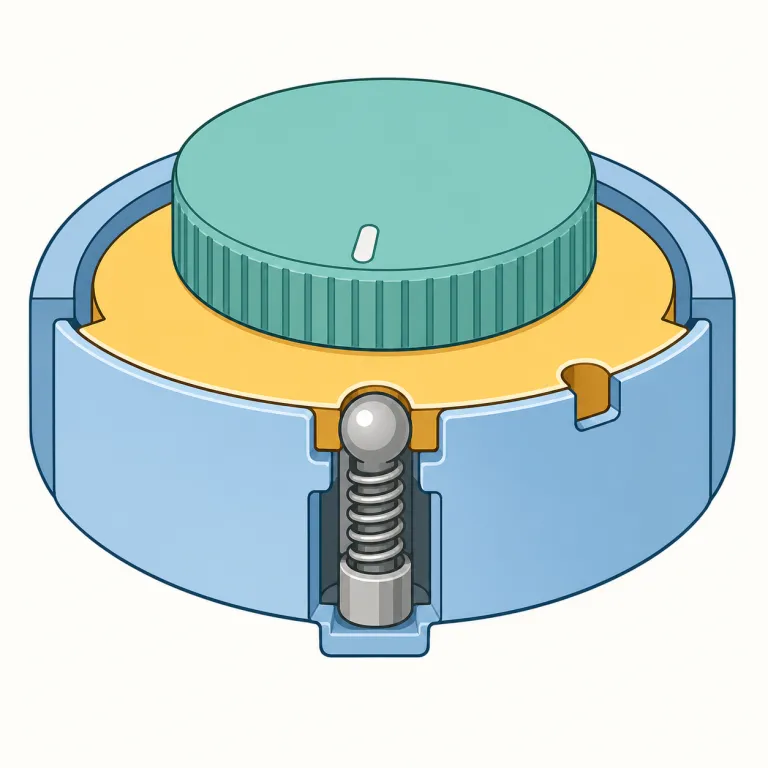
戻り止め
解説 Definition
機械部品の一つで、レバーや歯車などを所定の位置で止めたり保持したりする戻り止め装置です。動きを一方向に送るというより、位置決めして勝手に動かないようにする働きが中心です。
A detent is a small mechanical device that holds a part in a fixed position until enough force moves it. It is commonly found in machines, tools, switches, and adjustable equipment. The word is technical and usually used in engineering contexts.
覚え方のコツ Memory Tip
detent は単語単体で暗記するより、機械の「カチッと段階位置にはまり、勝手に戻らない」場面と結びつけると残りやすい。dent が「へこみ・くぼみ」なので、レバーや歯車のくぼみに爪や球が引っかかって保持する絵を持つとよい。brake のように動きを強く止める装置全体というより、位置決めして保持する小さな部品という感覚。ball detent, detent mechanism がよく出る。ratchet は連続した歯で一方向に送る仕組みだが、detent は「所定位置で止まる」側に意識を置くと区別しやすい。
Remember it through a machine image, not through definition alone. A `detent` is the little part that makes something click into place and stay there. You can connect it with `dent`, a small hollow where a piece catches. Phrases like `ball detent` and `detent mechanism` are common and help fix the word in context.
例文
The detent mechanism prevents the door from sliding open unexpectedly.
デテント機構は、ドアが不意に滑って開くのを防ぎます。
The spring detent holds the lever in place until released.
ばね式の戻り止めは、解除されるまでレバーを所定の位置に保持します。
The detent holds the lever in place, preventing accidental movement.
戻り止めがレバーを所定の位置に保持し、誤作動を防ぎます。
detent の類義語・関連語
類義語
紛らわしい語
detent の語源・成り立ち Etymology
detent はフランス語 détente に由来し、さらにラテン語 dis-「離して」+ tendere「張る」へつながります。原義は「ゆるめること」ですが、機械では逆に動きをいったん止めて保持する爪を指すようになりました。tension や extend も同じ tendere 系です。
Detent came from French détente, which is linked to Latin dis- "apart" and tendere "to stretch." That root also appears in tension and extend. The original idea was a loosening or releasing, but in mechanics it shifted to mean a device that holds movement briefly in place.
同じレベルの語彙をもっと
外部辞書で調べる
この英単語をクイズで覚えよう