膜透析、透析分離
noun 名詞化学や生化学で、半透膜を通過する速さや可否の違いを利用して、溶液中の小さな分子やイオンを大きな分子から分離する操作を指します。腎機能を代替する治療ではなく、物質を精製・分離する実験技法として使われます。
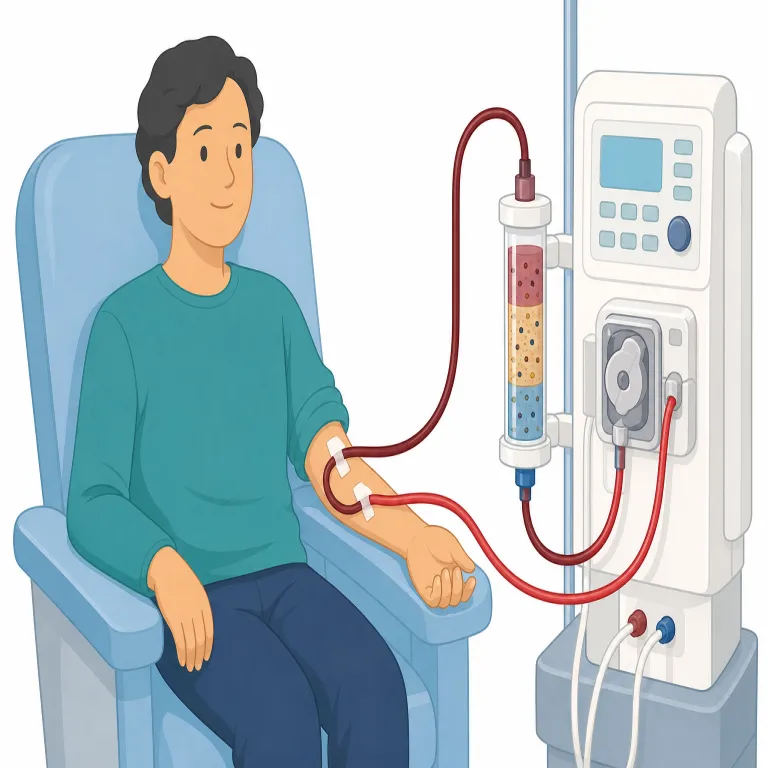
腎臓病や腎不全の治療法で、人工的に体内の老廃物や余分な水分を取り除くプロセスです。透析機を使って血液を浄化します。
Dialysis is a medical treatment that cleans the blood when a person's kidneys cannot do this properly. It removes waste and extra fluid from the body. This word is mainly used in hospitals and health care discussions.
kidney failure の文脈で覚えると定着しやすい語です。訳語だけでなく、「腎臓がうまく働かないとき、機械で血液中の老廃物や余分な水分を除く治療」と一場面で覚えるのがコツ。使われ方は undergo dialysis, start dialysis, dialysis machine, dialysis patient など医療場面でかなり固定的。diagnosis(診断)や analysis(分析)と見た目が少し似るので、dialysis は必ず“治療・血液浄化”に結びつけて区別すると忘れにくいです。
Remember it through the hospital scene: when the kidneys cannot do their job, a machine cleans the blood. Common phrases like `undergo dialysis`, `start dialysis`, and `dialysis machine` help fix it in memory. Do not confuse it with similar-looking words like `diagnosis` or `analysis`.
Patients with kidney failure often require dialysis three times a week.
腎不全の患者は通常、週3回の透析が必要です。
Dialysis helps remove excess water and waste products from the blood.
透析は血液から余分な水分と老廃物を除去するのに役立ちます。
Without dialysis, kidney disease patients would face serious health complications.
透析を受けなければ、腎臓病の患者は深刻な健康障害に直面するでしょう。
文脈によって、次の意味でも使われます。
化学や生化学で、半透膜を通過する速さや可否の違いを利用して、溶液中の小さな分子やイオンを大きな分子から分離する操作を指します。腎機能を代替する治療ではなく、物質を精製・分離する実験技法として使われます。
dialysis はラテン語を経てギリシャ語 dialysis「分離・溶解」に由来し、dia-「通して・離して」+ lysis「ほどくこと」に分解できます。原義は「ゆるめて分ける」で、膜を通して不要物を分ける『透析』の意味に自然につながります。関連語に analysis, paralysis があります。
Dialysis comes through Latin from Greek dialysis, meaning "separation" or "dissolving." It is built from dia-, meaning "through" or "apart," and lysis, meaning "loosening." The basic idea is "loosening and separating," which later fit the modern sense of separating substances through a membrane; analysis and paralysis share the same -lysis root.
この英単語をクイズで覚えよう