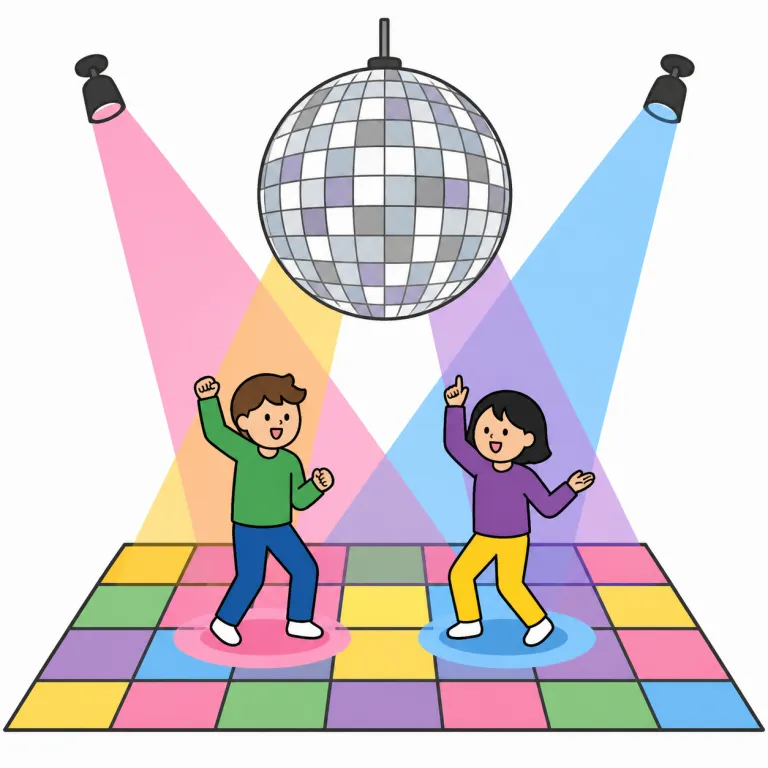
ディスコパーティー、ダンスイベント
noun 名詞discoの複数形として、録音された音楽に合わせて踊る催しやパーティーを指すことがある。特に英国英語ではschool discoのように使われ、会場そのものではなく開催される行事を表す。
ディスコ(ダンスホール)の複数形。1970年代に流行した音楽とダンスの場。
Discos are clubs or places where people go to dance to recorded music, especially popular in the 1970s and 1980s style. The word can also refer to dance events with that kind of music and atmosphere. In modern English, "nightclubs" is often more common.
まず単数形 disco を確実に押さえ、そこに複数の -s が付いた形だと見ると覚えやすいです。意味は「ディスコという場所がいくつもある」。music や dance そのものではなく、go to discos / dance at discos のように“遊びに行く場所”として出やすい点が重要です。club と近いですが、disco は特に1970年代風のダンス音楽やきらびやかな雰囲気を連想すると定着します。disks ではなく discos なので、つづりの違いにも注意しましょう。
Start with the singular form `disco`, then just add `-s` for the plural. Think of `go to discos` or `dance at discos`, so you remember it is mainly about places, not just music. It also carries a strong 1970s dance-club feeling.
The discos of the 1970s were famous for their mirror balls and flashing lights.
1970年代のディスコはミラーボールと点滅するライトで有名だった。
On Saturday nights, the city's discos were packed with young people dancing to funk and soul.
土曜の夜になると、街のディスコはファンクやソウルに合わせて踊る若者たちで満員だった。
Many old discos have been converted into modern nightclubs or event venues.
かつてのディスコの多くは現代のナイトクラブやイベント会場に改装されている。
文脈によって、次の意味でも使われます。
discoの複数形として、録音された音楽に合わせて踊る催しやパーティーを指すことがある。特に英国英語ではschool discoのように使われ、会場そのものではなく開催される行事を表す。
discos は disco の複数形で、disco は discotheque の短縮です。discotheque はフランス語由来で、disco- はギリシャ語 diskos「円盤」、-theque は「しまう場所」。disc や disk も同根で、もとは「レコード置き場」でした。
Discos is the plural of disco, which is a shortened form of discotheque. Discotheque came from French and combines disco-, from Greek diskos "disk, round plate," with a part meaning "place for storing." It first referred to a place for records, and then to a club built around recorded dance music; disc and disk are related words.
この英単語をクイズで覚えよう