判別式
解説 Definition
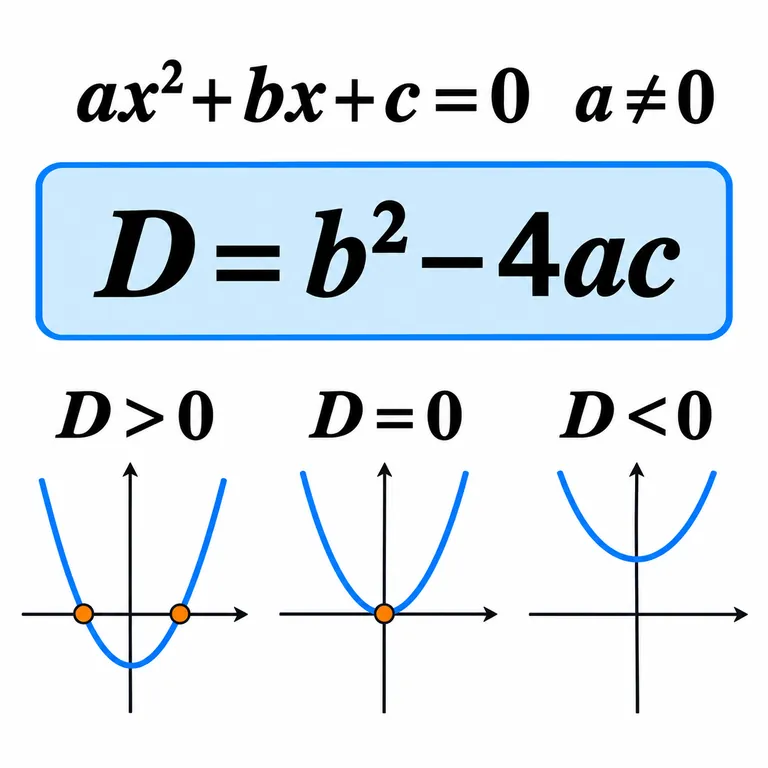
二次方程式の解の性質を判定する式。その値によって、実数解の個数などを見分ける。
A discriminant is a number in mathematics that gives information about the solutions of an equation. It is especially used with quadratic equations to show how many real solutions there are. This is a technical term mainly used in algebra.
使い方 Usage
使い分け Common distinctions
- つづりの似た determinant は「行列式」。解の性質を判別する discriminant「判別式」と区別する。 Do not confuse discriminant with the similarly spelled determinant, a different mathematical term.
覚え方のコツ Memory Tip
discriminate「区別する」と結び付け、解の性質を「判別してくれるもの」と覚える。二次方程式の b^2 - 4ac と、その値が正・ゼロ・負になる場面を一緒に思い浮かべる。
Connect discriminant with discriminate, meaning to tell things apart. Remember it alongside b^2 - 4ac and the positive, zero, and negative cases.
例文
If the discriminant is negative, the equation has no real solutions.
判別式が負の場合、その方程式は実数解を持ちません。
Students learn to calculate the discriminant in algebra class.
学生は代数の授業で判別式の値の計算を学びます。
discriminant の類義語・関連語
紛らわしい語
discriminant の語源・成り立ち Etymology
ラテン語 discriminare/discrimen にさかのぼり、dis-「離して」+ cernere「見分ける・より分ける」が核です。discern や certain と同根で、判別式が「解の性質を見分けるもの」だと腑に落ちます。
Discriminant goes back to Latin discriminare and discrimen, words about separating and distinguishing. They are built from dis-, meaning "apart," and cernere, meaning "to sift out" or "tell apart." The central idea is making a distinction, which later led to the mathematical sense of something that tells different cases apart. Related English words include discern and certain.
同じレベルの語彙をもっと
外部辞書で調べる
この英単語をクイズで覚えよう