えいたんごクイズ

disillusionment

/ˌdɪsəˈluːʒənmənt/

意味一覧 (4件)

noun

幻滅げんめつ

解説 Definition

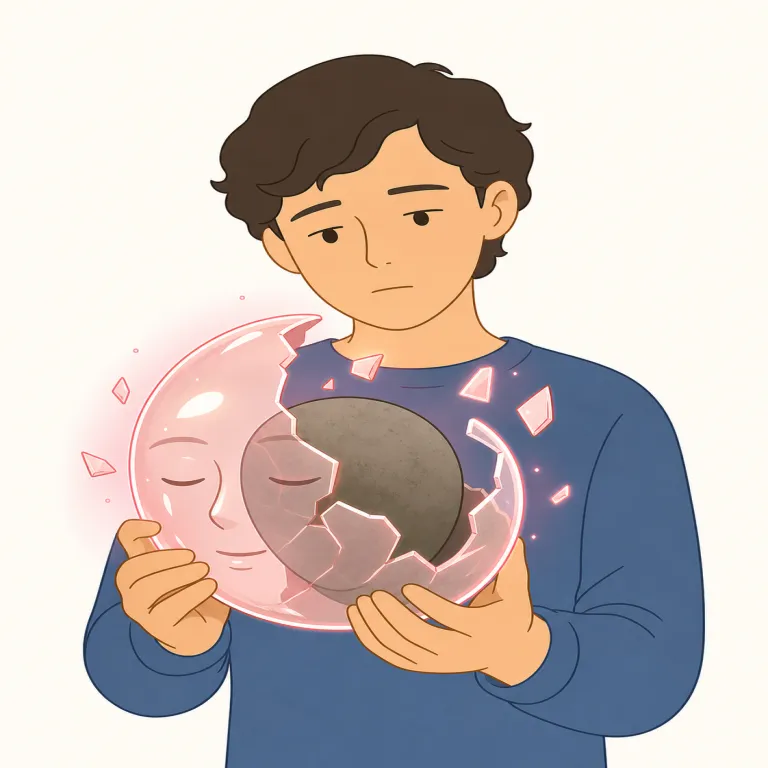
信じていた理想が破裂したり、期待が裏切られたりした際の失望感や幻滅を指します。理想と現実のギャップで生じる感情です。

Disillusionment is the feeling of being disappointed after realizing that someone or something is not as good as you believed. It often happens when hopes, ideals, or trust are broken. The word is common in discussions of politics, work, relationships, and social issues.

覚え方のコツ Memory Tip

disillusionment は illusion「幻想・思い込み」が壊れた後に残る、苦い失望感として覚えるとよいです。dis- は「取り除く」方向、-ment は状態・結果を表す名詞化なので、「理想の見え方がはがれた結果の感情」と整理できます。widespread disillusionment with politics や public disillusionment with leaders のように、信じていた人・組織・制度が期待ほどではないと知った後の幻滅に焦点があります。冷静に現実を知るだけでなく、落胆の気持ちを含みます。

Break it into `dis-` + `illusion` + `-ment`. An `illusion` is a false picture, and `dis-` shows that it falls away. `Disillusionment` is the disappointed feeling after your ideal image of someone or something collapses. It often appears with politics, leaders, institutions, or beliefs.

例文

The scandal caused widespread disillusionment among voters.

スキャンダルは有権者の間で広範な幻滅を引き起こしました。

After the failed project, she experienced complete disillusionment.

プロジェクトの失敗の後、彼女は完全な幻滅を経験しました。

His disillusionment with the company led him to resign.

会社に対する彼の幻滅が辞任につながりました。

noun

失望しつぼう

(意味 2)

解説 Definition

期待が裏切られた感情

例文

His disillusionment with the company led him to quit.

会社への失望は彼を辞めさせた。

She felt disillusionment after discovering the truth.

真実を発見した後、彼女は失望を感じた。

The scandal caused widespread disillusionment.

そのスキャンダルは広範な失望を引き起こした。

noun

覚醒かくせい

(意味 3)

解説 Definition

思い込みや迷いが取り払われ、現実をはっきり理解するようになる状態を指します。政治・宗教・人間関係などで、以前信じていた見方から離れ、物事を冷静に見直す文脈で使われます。感情としての落胆より、認識の変化に焦点があります。

Disillusionment is the state of seeing reality clearly after a false belief, ideal image, or hope has been removed. It is often used when someone changes the way they think about politics, religion, or personal relationships. The focus is not only on sadness or disappointment, but on a new and more realistic understanding.

覚え方のコツ Memory Tip

malus は、規則違反や契約違反などに対して科される金銭的な罰を表す名詞です。語頭 mal- は malfunction「故障」、malpractice「不正行為」、malicious「悪意のある」と同じく、悪い・害のある方向を示します。bonus が良い結果への上乗せなら、malus は悪い行為への不利益と考え、法律・保険・料金制度で支払わされる penalty と結びつけて覚えましょう。

Think of disillusionment as dis- plus illusion plus -ment. If an illusion is a false picture, disillusionment is the state after that false picture is removed. It helps you remember that the word is about waking up to reality, not just feeling sad.

例文

After years of trust, the scandal left many voters with a deep sense of disillusionment.

長年の信頼のあと、その不祥事は多くの有権者に深い覚醒をもたらした。

Her disillusionment with the company grew when she realized how little it cared about its workers.

会社が労働者をほとんど大切にしていないと気づき、彼女のその会社への覚醒は強まった。

The novel captures the disillusionment of a young man who slowly sees the world as it really is.

その小説は、世界の現実を少しずつ見抜いていく若者の覚醒を描いている。

noun

(意味 4)

解説 Definition

期待や理想が破れることで生じる失望の状態。これまで信じていた信念や幻想が冷めて、現実に目覚める心理状態を指す。

例文

After the betrayal, her disillusionment was complete.

その裏切りの後、彼女の幻想は完全に冷めた。

His romantic disillusionment was heartbreaking.

彼のロマンチック的な幻想が冷めたことで彼の心が砕けた。

The disillusionment came slowly.

その幻想はゆっくり冷めていった。

disillusionment の語源・成り立ち Etymology

disillusionment は dis-「取り去る」+ illusion「幻・思い込み」+ -ment「状態」から成り、illusion はフランス語を経てラテン語 illusio「あざむき」にさかのぼります。つまり「かかっていた幻が外れた状態」が幻滅で、delude や ludicrous も同じ語根 lud- に連なります。

Disillusionment is built from dis- meaning "away" or "removal," illusion, and the noun ending -ment. Illusion came into English through French from Latin illusio, from a verb meaning "to mock" or "deceive." So disillusionment originally meant the state in which a false belief or pleasing illusion has been taken away; related words include delude and ludicrous.

外部辞書で調べる

この単語をシェア

この単語を英単語クイズで覚えよう