粉をまぶすこと
noun 名詞調理で、焼いたり揚げたりする前の食材に小麦粉、パン粉、砂糖などを薄くまぶす作業を指す。水底の土砂を取り除く浚渫とは異なり、食材の表面を乾いた材料で覆う調理工程である。
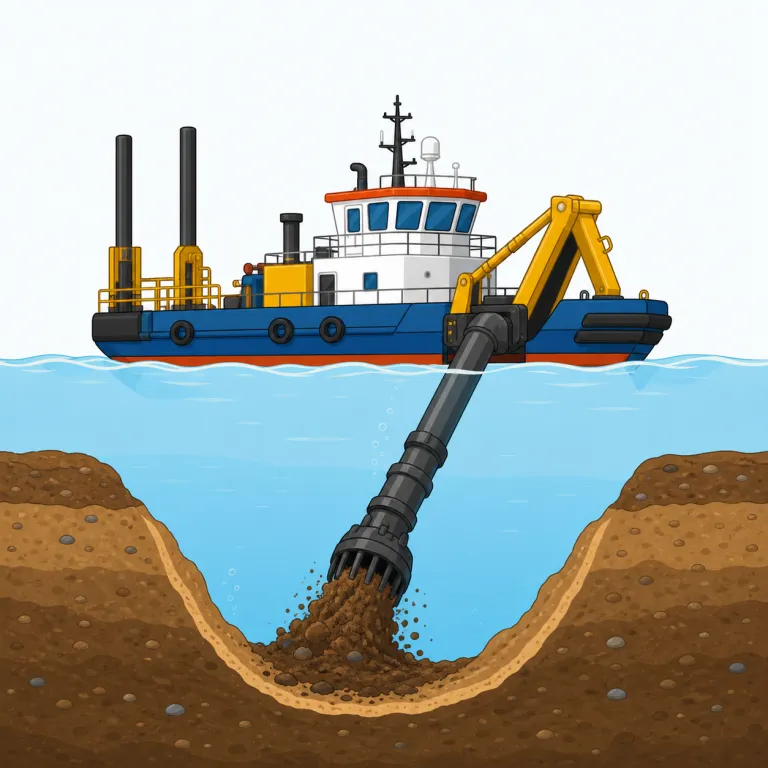
河川や港の底の土砂を掘削して取り除く作業や、その作業で得られるものを指す名詞です。航行の安全や排水能力の確保のために行われます。
Dredging is the process of removing mud, sand, or other material from the bottom of a river, lake, or sea. It is usually done to make waterways deeper for ships, prevent flooding, or support construction work. The word is mainly used in engineering and environmental contexts.
dredging は、まず動詞 dredge を先に覚えると定着しやすい語です。-ing が付いて「さらう作業そのもの」という名詞になります。つづりは drag に少し似ているので、水底の土砂をずるずる引き上げる場面を頭に置くと記憶しやすいです。文脈は river, harbor, channel, riverbed と相性がよく、dredging operations や dredging the harbor の形で出やすいです。dig が単に掘るのに対し、dredging は航路確保や排水のために底をさらって取り除く作業、と用途込みで覚えるとぶれません。
It helps to learn the verb `dredge` first, then see `dredging` as the activity itself. The spelling looks a bit like `drag`, which is a useful memory hook: imagine dragging mud up from the bottom of a river or harbor. It often appears with words like `harbor`, `channel`, and `riverbed`, so connect it with clearing the bottom of the water.
Dredging the river will make it safer for boats.
川を浚渫することで、船がより安全に通れるようになる。
Dredging operations are necessary to maintain the harbor.
港を維持するために浚渫作業が必要である。
Environmental concerns have delayed the dredging project.
環境への懸念が浚渫プロジェクトを遅延させている。
文脈によって、次の意味でも使われます。
調理で、焼いたり揚げたりする前の食材に小麦粉、パン粉、砂糖などを薄くまぶす作業を指す。水底の土砂を取り除く浚渫とは異なり、食材の表面を乾いた材料で覆う調理工程である。
dredging は dredge+-ing で、dredge は中英語の川底をさらう道具名に由来する語です。ゲルマン系の「引いてすくう」語群と結びつけて考えられ、水底の土砂を引き上げる作業名になったと分かるので、drag や dredger が関連語です。
Dredging comes from dredge plus -ing. Dredge goes back to Middle English, where it referred to a tool used to scrape or lift material from the bottom of water. The word is linked to Germanic ideas of dragging or drawing up, and it later came to mean the whole process of clearing mud or sand from rivers, harbors, and similar places. Related words include drag and dredger.
この英単語をクイズで覚えよう