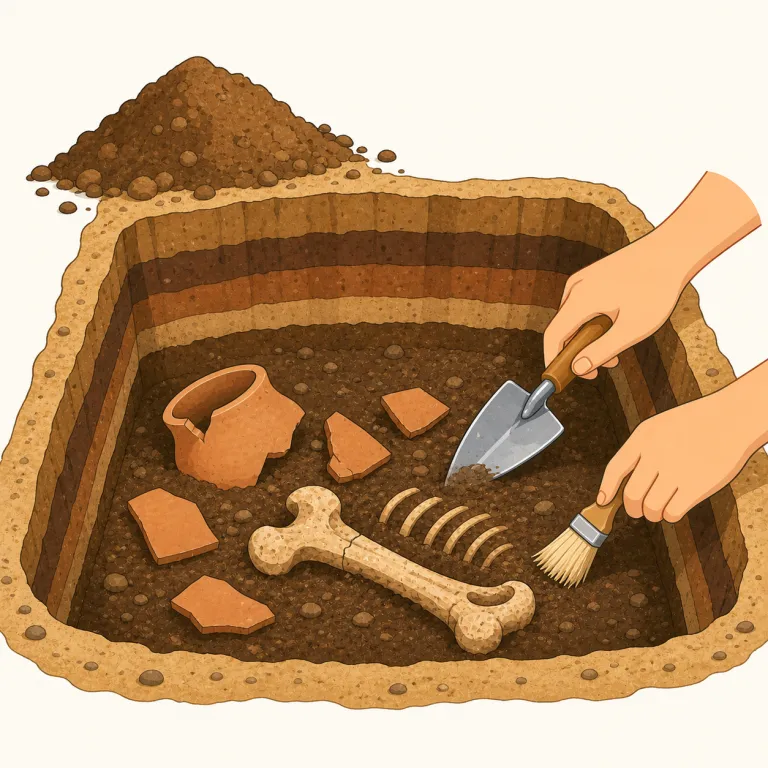
excavation
excavation は英検1級レベルの英単語で、「発掘、掘削」という意味があります。発音記号は /ɛksəˈveɪʃən/ です。
発掘、掘削
解説 Definition
地面や岩盤を掘り起こす作業、またはその結果できた掘られた部分を指す名詞。考古学では遺跡や遺物の発掘調査を表し、建設や土木では基礎工事や設備工事のための掘削作業を表す。
Excavation is the act of digging into the ground to remove earth, find buried things, or prepare a site. It is often used in construction, archaeology, and engineering. It can mean both the digging process and the place that has been dug out.
覚え方のコツ Memory Tip
excavate(掘り起こす)を知っていれば、その名詞形が excavation。まず「遺跡や工事現場で、人や重機が計画的に地面を掘る場面」を頭に置くと定着しやすいです。日常会話の dig よりも、専門的で規模のある『掘削・発掘作業』という響きが強め。archaeological excavation なら遺跡の発掘、site excavation なら建設前の掘削。-ion は動作や結果を名詞化する形なので、『掘ること』と『掘られた部分』の両方を指せる語だと整理すると覚えやすいです。
If you know `excavate`, `excavation` is the noun form. It sounds more technical and planned than simple `dig`, so imagine archaeologists or construction workers. Useful pairs like `archaeological excavation` and `site excavation` make the word easier to fix in memory.
例文
The excavation of the ancient site revealed artifacts over 2,000 years old.
その古代遺跡の発掘により、2,000年以上前の遺物が見つかった。
Construction crews began excavation for the new building's foundation.
建設作業員たちは新しい建物の基礎のための掘削を始めた。
The archaeological excavation took three years to complete.
その考古学的な発掘調査は完了まで3年かかった。
excavation の類義語・関連語
excavation の語源・成り立ち Etymology
ラテン語 excavare(くり抜く)が語源で、ex-「外へ」+ cavus「空洞の」から成ります。『中を空にする』感覚が、土を掘って埋もれたものを現す『発掘』の意味につながりました。関連語は cavity、concave です。
Excavation comes from Latin excavare, meaning "to hollow out," from ex- "out" and cavus "hollow." The original idea was making something empty inside. In English, this developed into the sense of digging out earth to uncover what is buried. Related words include cavity and concave.
同じレベルの語彙をもっと
英検1級の一覧へ →外部辞書で調べる
この英単語をクイズで覚えよう