塹壕に陣取った、強固に守られた
adjective 形容詞軍事の文脈で、兵士や部隊が塹壕に入り、防御態勢を固めている状態を表す。an entrenched positionのように、攻撃を受けても容易には動かせない陣地について用いられる。
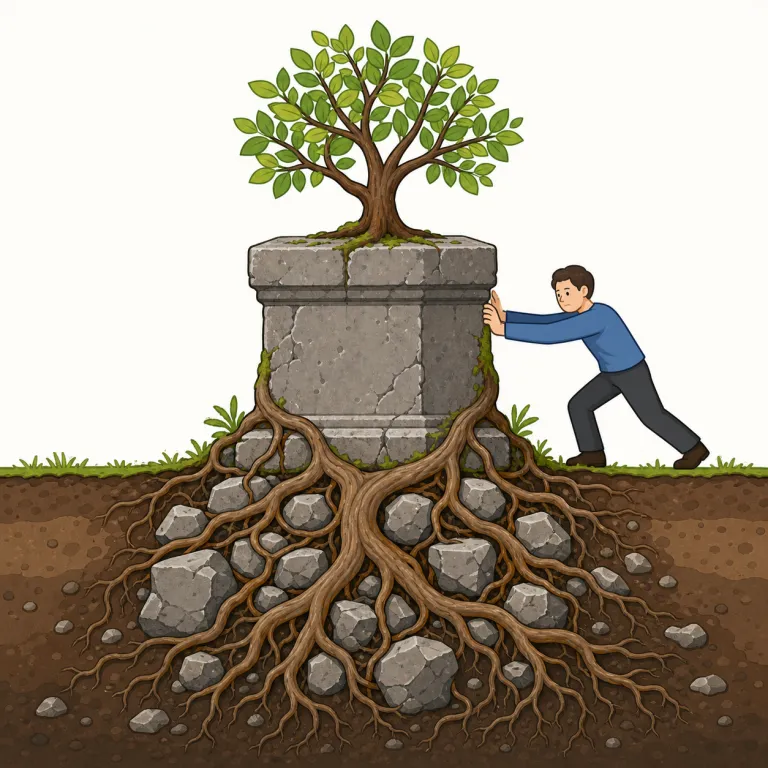
entrenched は英検1級レベルの英単語で、「根強い」という意味があります。発音記号は /ɪnˈtrɛntʃt/ です。
考え方・習慣・制度などが深く定着していて、簡単には変えられない状態。長く続いてきたものが、変化への抵抗を伴って根付いていることを表します。
Entrenched describes something that is strongly established and difficult to change. It is often used for beliefs, habits, systems, or social problems that have existed for a long time. The word usually suggests deep roots and resistance to change.
深く固定されて、引き抜こうとしても簡単には動かないものを思い浮かべましょう。
Picture something fixed so deeply that it is hard to pull out or change.
It is hard to change the entrenched routines of the office.
その職場の根強い習慣を変えるのは難しい。
The law is entrenched in the country’s constitution.
その法律は国の憲法に確固として組み込まれている。
The reform faced opposition from entrenched interests.
その改革は根強い既得権益層からの反対に直面した。
文脈によって、次の意味でも使われます。
軍事の文脈で、兵士や部隊が塹壕に入り、防御態勢を固めている状態を表す。an entrenched positionのように、攻撃を受けても容易には動かせない陣地について用いられる。
entrenched は en-「中へ」+ trench「溝・塹壕を掘る」から成り、古フランス語 trenchier「切る」がもとです。もとは“塹壕に守られた”状態で、そこから考えや制度が容易に崩れない「根強い」という意味へ広がりました。関連語は trench、retrenched です。
"Entrenched" comes from en- and "trench," from Old French "trencher," meaning "to cut." It first described something protected by a trench or earthwork. From that military image, it later came to describe ideas, systems, or habits that are so firmly established that they are hard to remove.
この英単語をクイズで覚えよう