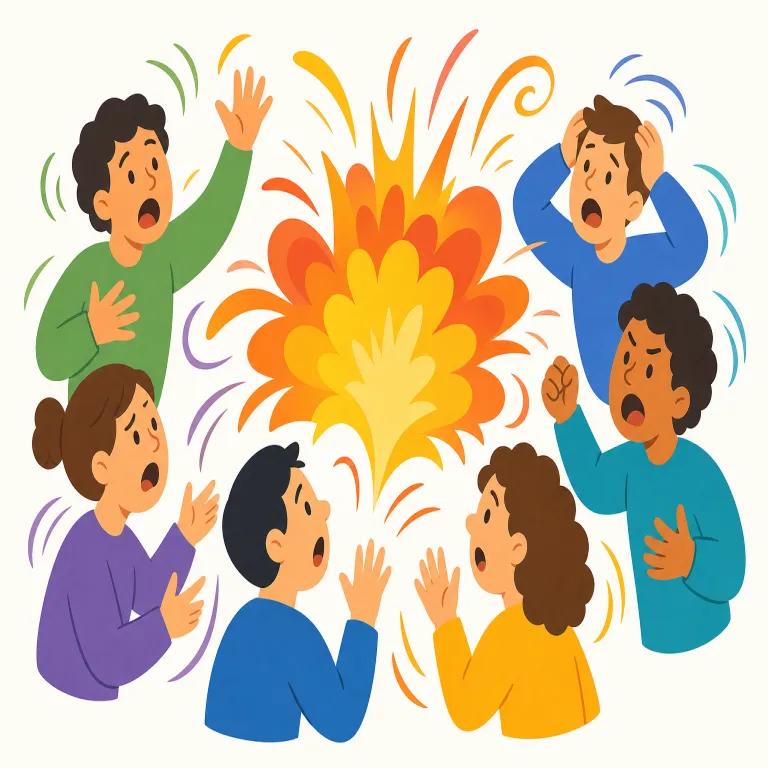
furore
furore はTOEIC 860・TOEFL 80・IELTS 6.5レベルの英単語で、「大騒ぎ」という意味があります。発音記号は /fjʊˈrɔːri/ です。
大騒ぎ
解説 Definition
世間を巻き込む大きな騒ぎや、出来事に対する激しい怒り・論争の反応を表す名詞。
Furore is a sudden strong reaction of public anger, excitement, or controversy about something. It is often used in news, politics, and social discussions when many people are upset or arguing. This spelling is especially British English; American English often uses furor.
使い方 Usage
使い分け Common distinctions
- fuss は比較的小さな騒ぎにも使えます。outrage は強い憤り、furore は世間に広がる騒ぎに焦点があります。 Fuss can describe a relatively small disturbance. Outrage focuses on strong indignation, while furore focuses on widespread public uproar.
覚え方のコツ Memory Tip
fury「激しい怒り」や furious「激怒した」と結び付け、その感情が個人を超えて世間の騒ぎへ広がる場面を思い浮かべましょう。
Connect furore with fury or furious. Picture strong emotion spreading beyond one person into public noise and controversy.
例文
The sudden price increase created a furore among consumers.
突然の値上げは消費者の間で大騒ぎを引き起こした。
The politician's remarks caused a furore in the media that lasted for weeks.
その政治家の発言はメディアで何週間も続く大騒ぎを引き起こした。
furore の類義語・関連語
furore の語源・成り立ち Etymology
furore は英語にイタリア語形で入った語で、さらにさかのぼるとラテン語 furor「狂気・激しい怒り」に行き着きます。理性を失うほど感情が燃え上がる感じが核にあり、そこから「大騒ぎ」「騒然たる反応」の意味になりました。関連語は fury, furious です。
Furore entered English from Italian and goes back to Latin furor, meaning madness or violent passion. The original sense was a state of overpowering emotion, almost beyond reason. From that, English developed the idea of a public outburst or great stir; related words include fury and furious.
同じレベルの語彙をもっと
TOEIC 860の一覧へ →外部辞書で調べる
この英単語をクイズで覚えよう