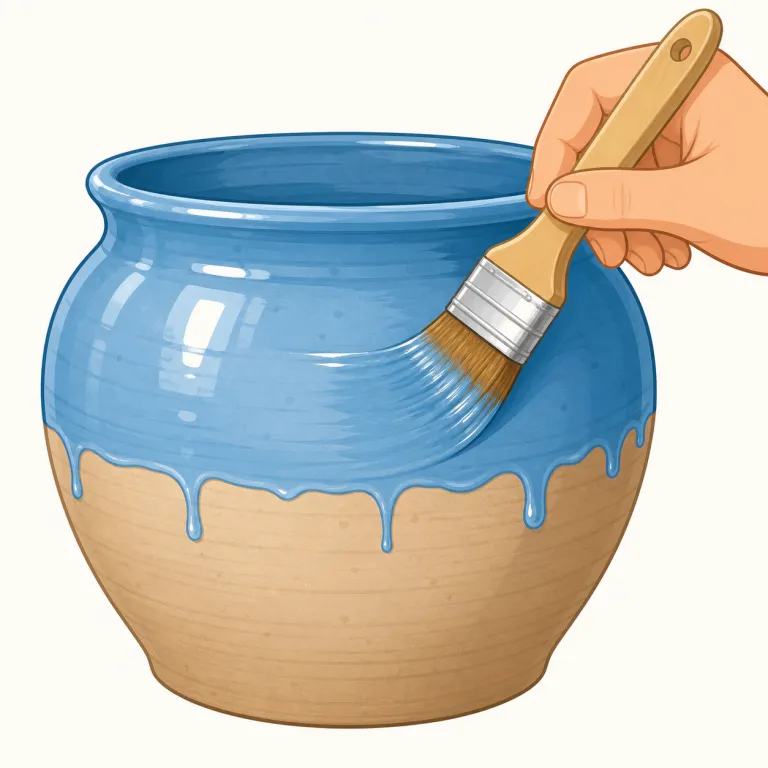
うわ薬をかける、つや出しをかける
解説 Definition
陶器や食べ物などの表面に、つやのある薄い層をかけることを表します。焼き物では、焼く前にうわ薬をぬって、表面をなめらかで光るようにします。ケーキや肉などに甘いたれやソースをぬって、つやを出すときにも使います。
To cover the surface of pottery, food, or another object with a thin shiny coating. It often means applying glaze to ceramics or brushing syrup or sauce on food to make it glossy.
覚え方のコツ Memory Tip
glaze は、陶器や食べ物の表面を「ガラスのように薄く光らせる」動作として覚えると定着しやすい語です。単に paint「色を塗る」のではなく、つやのある膜で覆う点が中心。陶芸なら glaze a bowl before firing「焼く前に鉢へうわ薬をかける」、料理なら glaze cookies with sugar syrup「クッキーに糖液でつやを出す」の形が便利です。刷毛でたれを塗り、表面が滑らかに輝く瞬間を一枚の映像に固定しましょう。
Think of adding a glass-like shine to the outside of something, such as a bowl or a cookie.
例文
The potter glazed the bowl before firing it.
その陶芸家は、焼く前にその鉢にうわ薬をかけました。
She glazed the cookies with sugar syrup.
彼女はクッキーに砂糖のシロップをぬってつやを出しました。
Brush the sauce on the ham to glaze it.
ハムにつやを出すために、ソースをはけでぬってください。
(目が)うわの空になる、ぼんやりする
(意味 2)
解説 Definition
ここでは、疲れや退屈で目つきや表情が生気を失い、焦点が合わないぼんやりした状態になることを指す。特に glaze over の形でよく使われ、話を理解せず意識が上の空になっている様子を表す。
To glaze can mean for the eyes to become dull or unfocused, often because of boredom, tiredness, or lack of attention. In this use, it describes a blank or absent look. The word also has other meanings, such as covering food or pottery with a shiny layer, but that is a different use.
覚え方のコツ Memory Tip
目の表面に薄い膜がかかったように生気や焦点が失われる様子から、「目がぼんやりする」を表す。特に eyes glaze over の形が多く、長い講義や退屈な話の途中で理解や関心が途切れ、目がうつろになる場面に使う。単なる視力の低下ではなく、疲れや退屈による上の空の表情である。
Learn this as the fixed phrase glaze over. Picture eyes becoming like glass: shiny, unfocused, and empty. It is often used when someone listens to a long lecture or explanation and mentally switches off.
例文
His eyes began to glaze over during the long lecture.
長い講義のあいだに、彼の目はうつろになり始めた。
When the topic became boring, her eyes began to glaze over.
話題が退屈になると、彼女の目はぼんやりし始めた。
The student's eyes would glaze over whenever math class started.
数学の授業が始まると、その生徒の目は決まってうつろになった。
glaze の類義語・関連語
類義語
対義語
派生語
glaze の語源・成り立ち Etymology
もとは「ガラス」を表す語と関係があり、表面をガラスのようにつやつやさせることからこの意味になりました。うわ薬をかけた陶器が、なめらかで光る見た目になることと結びついています。
Glaze is related to glass. The idea developed from making a surface smooth and shiny like glass, especially by applying a coating to pottery.
同じレベルの語彙をもっと
外部辞書で調べる
この英単語をクイズで覚えよう