えずく、吐こうとする
verb 動詞吐き気で胃や体が激しく動き、吐こうとしてえずいている状態を表します。be heaving や be heaving into/over ... などで使い、単なる上下運動ではなく嘔吐反射を伴う点が中心です。
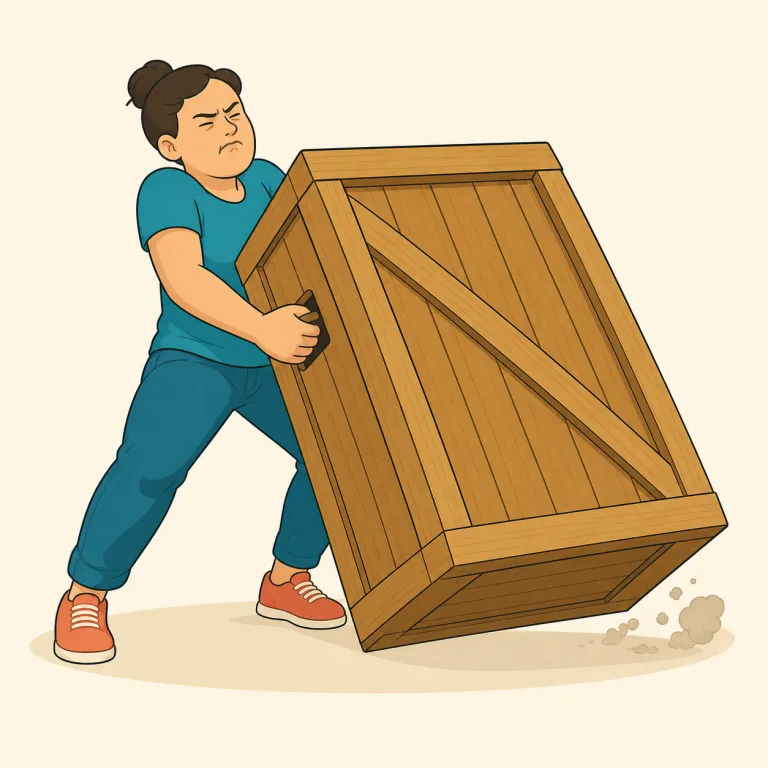
重たいものを大きな力で持ち上げるような動作を表します。息が荒くなって胸が上下する様子や、船や体が波や衝撃で大きく揺れる状態でも使われます。上下運動が激しくなる場面でしばしば用いられる語です。
Heaving means lifting, pulling, or moving something heavy with strong effort. It can also describe a strong upward and downward movement, especially of the body, the sea, or the chest while breathing. The word often suggests force, strain, or heavy motion.
heaving は heavy「重い」を連想すると、ただ軽く lift するのではなく、重さに逆らってよいしょと持ち上げる動作として覚えやすいです。箱をトラックへ積み上げる、胸が息で大きく上下する、海がうねる、という場面に共通するのは「力を伴う大きな上下運動」。主軸は重い物をぐっと上へ動かすことなので、単なる move や raise より荒く、負荷のある感じで切り分けると残ります。
Link it to `heavy`: `heave` often feels like moving something with effort, not just lifting it lightly. That gives the word a strong up-and-down motion. This is why it also works in images like `chest heaving` or `the sea was heaving`.
The workers were heaving the heavy boxes onto the truck.
作業員たちは重い箱を力いっぱい持ち上げ、トラックに積んでいました。
His chest was heaving as he ran up the steep hill.
急な丘を駆け上がる彼の胸は激しく上下していました。
The ship was heaving in the rough ocean waves.
船は荒れた海の中で大きく上下していました。
文脈によって、次の意味でも使われます。
吐き気で胃や体が激しく動き、吐こうとしてえずいている状態を表します。be heaving や be heaving into/over ... などで使い、単なる上下運動ではなく嘔吐反射を伴う点が中心です。
主にイギリスのくだけた表現で、場所が人でいっぱいになり活気にあふれている状態を表します。The club was heaving のように場所を主語にし、単なる混雑だけでなく騒がしく盛況な含みがあります。
heaving は動詞 heave に -ing が付いた形で、heave は古英語 hebban / hefan「持ち上げる、上へ運ぶ」にさかのぼります。語源の核は「上へぐっと動かす」ことなので、重い物を力を込めて持ち上げるこの行の意味にそのまま結びつきます。そこから胸や海が大きく上下する用法にも広がりました。
"Heaving" comes from Old English verbs such as "hebban" and "hefan," meaning to lift or raise up. The root idea is a strong upward movement. From that, the word developed both the sense of lifting something heavy and the sense of rising and falling in large motions, such as waves or breathing. Related words include "upheave," and it is historically close to "heavy."
この英単語をクイズで覚えよう