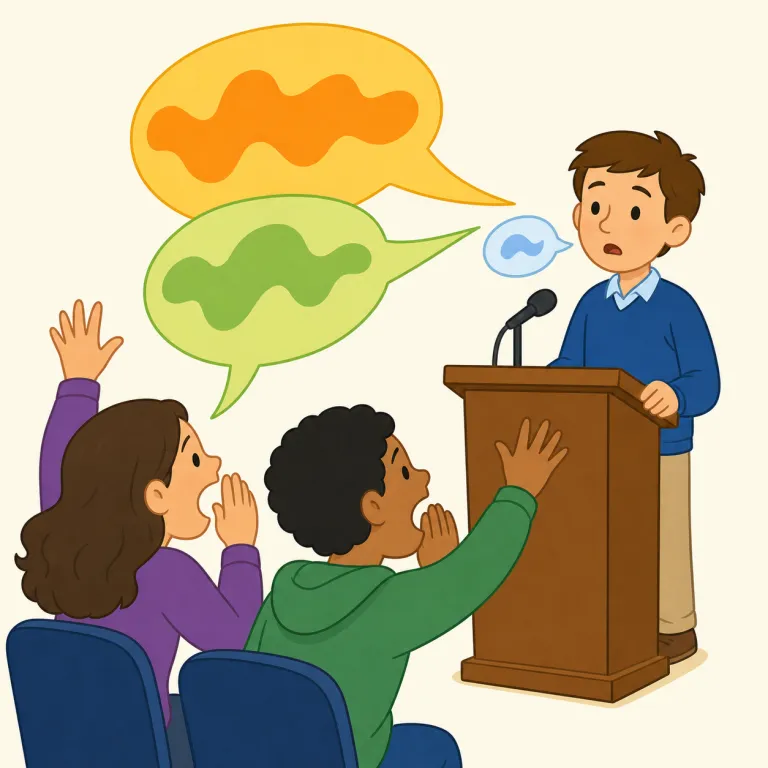
野次を飛ばす
解説 Definition
演説者やパフォーマーに対して、聴衆が妨害的な野次や質問を浴びせること。
To heckle means to interrupt a speaker, performer, or public figure by shouting comments, questions, or insults. The word usually suggests rude or hostile behavior at a public event.
覚え方のコツ Memory Tip
「演説やライブで、客席から話者に向かって次々と言葉を投げる場面」を映像で思い浮かべると定着しやすいです。単なる shout ではなく、相手を困らせたり流れを乱したりするために口をはさむ感じで、politicians get heckled, comedians are heckled のように人前で話す人に向かうのが典型。名詞 heckler「野次を飛ばす人」もセットで覚えると形で結びつきます。boo が短いブーイング寄りなのに対し、heckle は言葉で執拗に絡むニュアンス、と区別すると混同しにくいです。
Picture someone in the audience interrupting a speaker again and again. `Heckle` is not just shouting; it means throwing comments at someone to disturb them, especially in public speaking or comedy. Remember the noun `heckler` at the same time.
例文
Someone in the crowd began to heckle the comedian during his performance.
公演中に観客の中の誰かがそのコメディアンに野次を飛ばし始めた。
During her speech, several people tried to heckle her by shouting rude questions.
演説中、何人かが失礼な質問を叫んで彼女に野次を飛ばそうとした。
Security removed the man who continued to heckle the speaker at the conference.
会議で講演者に野次を飛ばし続けた男性を警備員が退場させた。
heckle の類義語・関連語
heckle の語源・成り立ち Etymology
「heckle」はスコットランド語で、もとは亜麻をくし状の道具で梳くことでした。語源はゲルマン系の hackle「とげ状の毛・くし」で、そこから人を言葉で細かく突く「野次を飛ばす」へ転じ、同根の hackle や hatchel にも“チクチク触る”感覚が残ります。
Heckle comes from Scots, where it first meant to comb or dress flax with a sharp tool. It is related to Germanic words such as hackle, which refer to bristling hairs or comb-like points. From the idea of pricking or teasing little by little, it later came to mean interrupting someone with sharp remarks.
同じレベルの語彙をもっと
外部辞書で調べる
この英単語をクイズで覚えよう