家に向かう、帰途の
adjective 形容詞人や列車・飛行機などが、自宅・故郷・本拠地へ向かっていることを表す。homebound travelers や a homebound train のように名詞の前で使われ、病気などで外出できない状態を示す語義とは文脈で区別する。
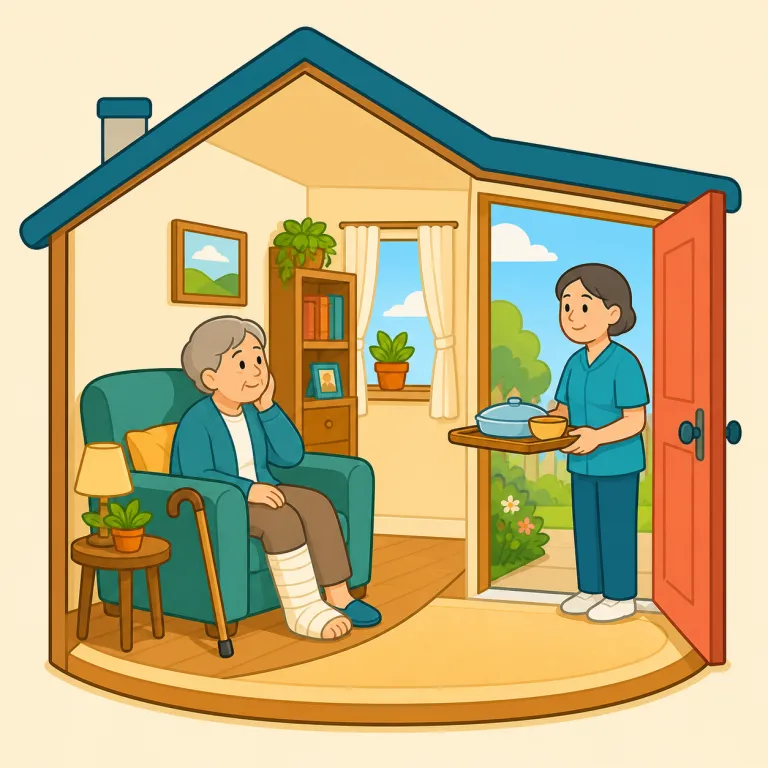
病気、けが、高齢などの理由で家から出られず、ほとんど自宅で過ごしている状態を表す形容詞。医療や福祉の文脈で、通院や買い物が難しい人についてよく使われる。別に「家に向かっている」の意味もあるが、ここでは在宅を余儀なくされた意味に絞る。
Homebound means unable to leave home regularly, often because of illness, age, or disability. It is used in medical, social, and everyday contexts to describe someone who stays at home most of the time. In some cases, it can also mean going toward home, but that meaning is less common here.
home + bound で考えると覚えやすい。bound は「〜行き」だけでなく、wheelchair-bound や bedbound のように「〜に縛られて動けない」の感覚でも出る。つまり homebound は「家に縛られている」→ 病気・けが・高齢などで外出しにくく、自宅中心で過ごす状態。homebound patients / seniors でよく見かけ、似た語 housebound もほぼ同じ。文脈次第で「家に向かう」の意味もあるので、医療・福祉文脈ではそちらと取り違えないのがコツ。
Break it into `home` + `bound`. In words like `bedbound` or `wheelchair-bound`, `bound` gives the idea of being limited or tied to something. That makes `homebound` easy to remember as a state of staying at home, often in medical or care contexts.
Meals are delivered daily to homebound seniors.
家から出られない高齢者には毎日食事が届けられる。
After the surgery, he was homebound for several weeks.
手術の後、彼は数週間家から出られなかった。
The clinic offers phone support for homebound patients.
その診療所は家から出られない患者に電話で支援を行っている。
文脈によって、次の意味でも使われます。
人や列車・飛行機などが、自宅・故郷・本拠地へ向かっていることを表す。homebound travelers や a homebound train のように名詞の前で使われ、病気などで外出できない状態を示す語義とは文脈で区別する。
homebound は home「家」+ bound「向かう、縛られた状態の」の複合語です。bound は bind に由来し、文脈により「家へ向かう」と「家に縛られて外出できない」の両方を表せます。関連語に inbound、outbound があります。
Homebound is a compound of home and bound. Bound comes from bind, but in compounds it can mean either "going toward" a place or "limited to" it. Because of this, homebound can mean either heading home or being kept at home. Related words include inbound and outbound.
この英単語をクイズで覚えよう