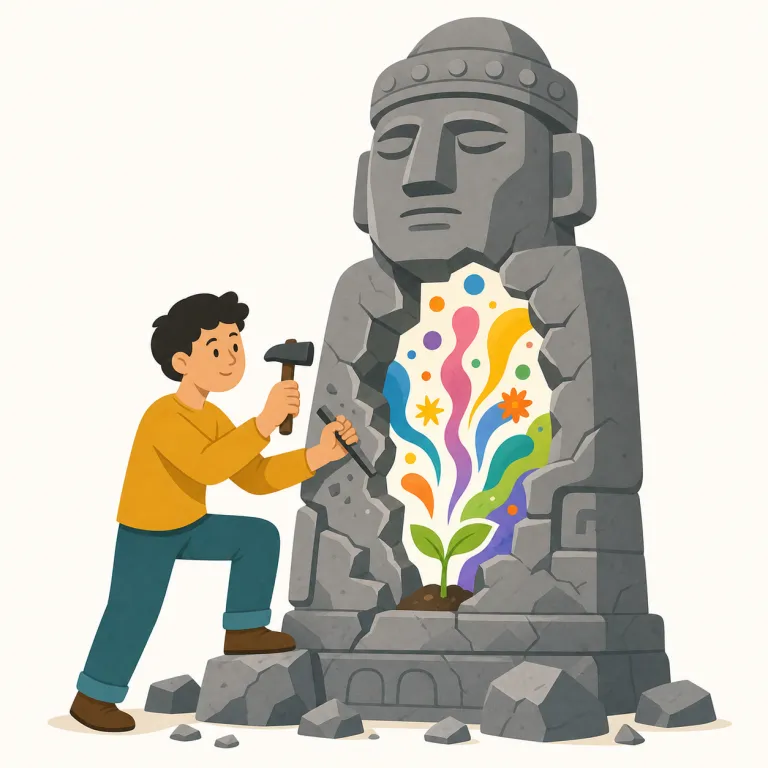
iconoclastic
iconoclastic は英検1級レベルの英単語で、「偶像破壊的な」という意味があります。発音記号は /aɪˌkɑːnəˈklæstɪk/ です。
偶像破壊的な
解説 Definition
伝統的な信仰や慣習、権威に対して批判的に挑戦するさま。
Iconoclastic describes someone or something that strongly challenges traditional beliefs, customs, or admired ideas. It is often used for people, art, or opinions that break away from accepted ways of thinking. The word can sound positive for originality or negative for disrespect.
覚え方のコツ Memory Tip
icon は「象徴・偶像」で見慣れている、と足場を作ると iconoclastic は「icon に挑み、壊しにいく側の態度」と覚えやすいです。実際には物理的に壊すより、伝統・権威・常識に公然と異議を唱える人や発想に使われ、an iconoclastic thinker / artist が典型。単なる critical より“既存の枠組みそのものを崩す”感じが強く、orthodox・conventional の反対側に置くと定着します。iconic と一字違いで意味はかなり逆、という対比も強い記憶フックです。
Start with `icon`, a word you already know. `Iconoclastic` is the attitude of attacking or breaking accepted icons, traditions, or old beliefs. It is easy to confuse with `iconic`, but they point in almost opposite directions.
例文
Her iconoclastic approach to education challenged the traditional lecture-based model.
彼女の型破りな教育手法は、従来の講義中心のモデルに挑戦するものだった。
The iconoclastic artist deliberately destroyed classical paintings to make a statement about the art world.
その既成概念を打ち破る芸術家は、美術界に問題を提起するため、古典絵画を意図的に破壊した。
His iconoclastic views on religion made him unpopular with the conservative establishment.
宗教上の伝統や権威に挑む彼の見解は、保守的な支配層の反感を買った。
iconoclastic の類義語・関連語
iconoclastic の語源・成り立ち Etymology
iconoclastic は iconoclast に形容詞語尾 -ic が付いた語で、さらにギリシャ語 eikon「像」+ klastes「壊す者」にさかのぼります。直訳は「像を壊すような」で、そこから慣習や権威を打ち破るという比喩の意味になりました。関連語に icon、iconoclasm があります。
Iconoclastic comes from iconoclast plus the adjective ending -ic. Iconoclast goes back through Late Greek to Greek eikon "image" and klastes "breaker." It first meant "image-breaking," especially in religion, and later grew into the wider idea of attacking accepted beliefs or traditions. Related English words include icon and iconoclasm.
同じレベルの英単語をもっと
英検1級の一覧へ →外部辞書で調べる
この単語を英単語クイズで覚えよう